
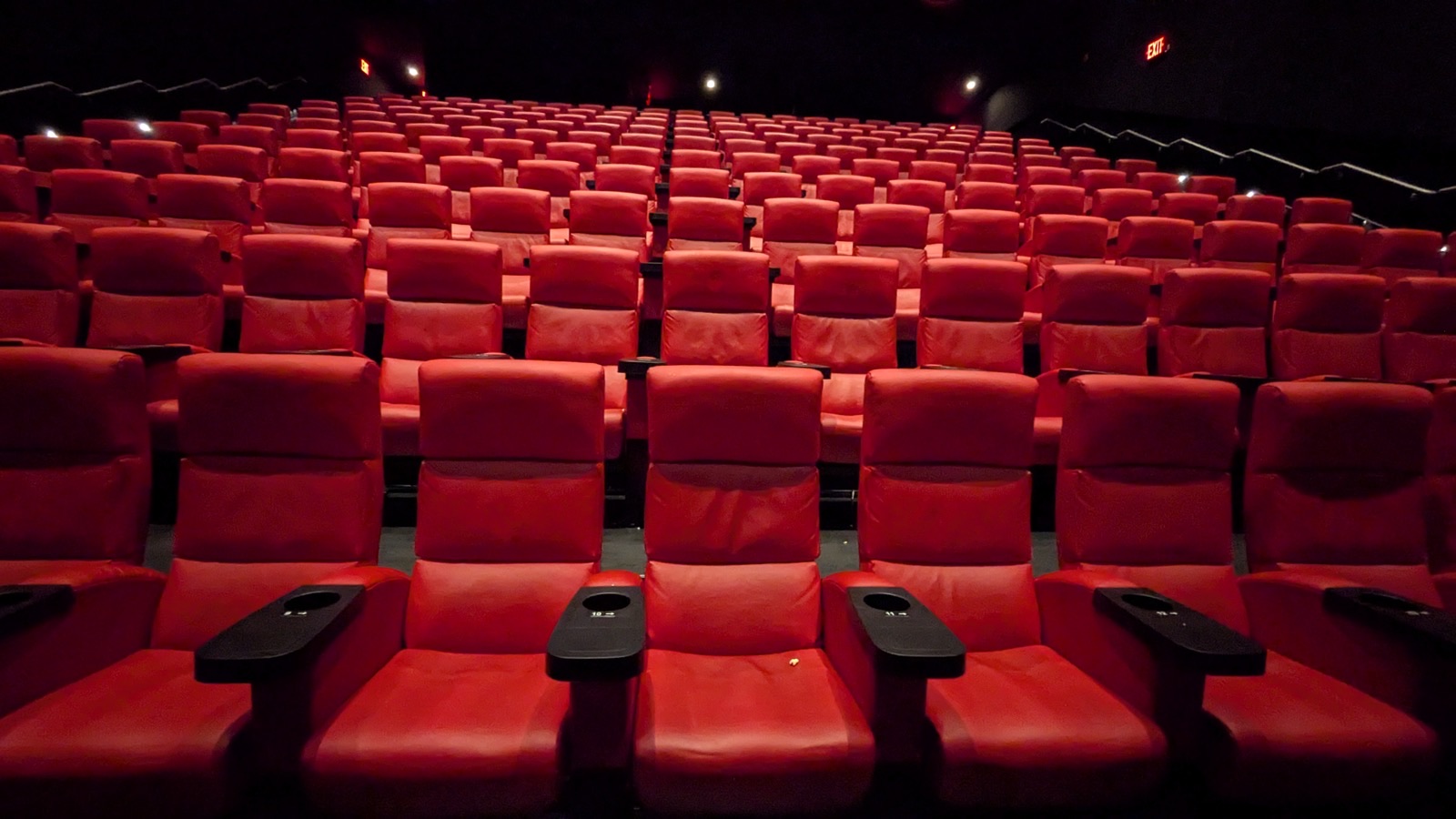
You're standing at the cinema booking screen with 50 seats available and no idea which to choose. You end up picking something in the middle, hoping for the best. Sound familiar? This guide will make that decision simple, scientific, and instantly applicable — so your next cinema visit is the best one you've had.
Why Your Seat Matters More Than You Think
A cinema isn't just a room with a screen. It's a precisely engineered acoustic and optical environment designed to deliver a specific experience — but only if you're sitting in the right position.
The filmmakers, sound designers, and cinematographers who created what you're about to watch had a reference seat in mind when they made their decisions. The sound engineer checked the mix from a specific position. The colour grader approved the image while sitting at a specific distance. When you sit in the optimal zone, you're experiencing the film as intended. When you don't, you're experiencing a degraded version.
The good news: finding the right zone is simple once you understand three basic factors.
The Three Factors That Determine Your Best Seat
Factor 1: Row Depth (How Far Back to Sit)
Row depth — how far back you sit from the screen — affects two things:
Visual comfort: The further back you sit, the smaller the screen appears and the lower the viewing angle. The closer you sit, the more you have to tilt your head upward and the more the screen fills your peripheral vision.
Audio quality: Cinema sound systems are calibrated for a specific "sweet spot" in the room — typically the middle third of the auditorium. Too far front and the direct speaker sound is harsh and imbalanced. Too far back and the surround reflections dominate.
The simple rule: Sit where the screen fills 30–45° of your horizontal field of view. In most standard cinemas, this is approximately 55–65% back from the screen (or equivalently, 35–45% from the back wall).
| Position | Screen Feel | Audio | Overall |
|---|---|---|---|
| Front 15% | Overwhelming — neck strain within 30 min | Harsh, unbalanced | Avoid |
| 15–35% from front | Large and immersive — slight tilt needed | Good, slightly bright on highs | Okay for action fans |
| 35–65% from front (optimal zone) | Ideal — fills vision without overwhelm | Best balanced audio | Best for most films |
| 65–80% from front | Comfortable — slightly smaller screen feel | Good but reflections increase | Fine for dialogue films |
| Back 20% | Small screen feel, reduced immersion | Dominated by reflections | Avoid for action films |
Factor 2: Column Position (Left, Right, or Centre)
Cinema sound systems are stereo (or surround-sound) environments that are mixed from the centre. When you sit off-centre:
- Left seats: Audio from the left speakers is louder, the right-side image is slightly distorted by perspective
- Right seats: Opposite problem — right speakers dominant, left-side perspective distortion
- Centre seats: Both channels balanced, screen geometry symmetric, image mathematically correct
The simple rule: Always aim for the centre column (or as close to it as your group size allows). In a 20-seat-wide auditorium, this means seats 9–12 in the relevant row.
Factor 3: Viewing Angle (How High to Aim)
This factor is often ignored but matters significantly. In a well-raked cinema, all seats should have clear sightlines — but the angle your eyes make with the screen differs based on row position.
- Steep downward angle (very back): You're looking down at the screen, which can create an artificial, "watching through a window" sense of separation
- Strong upward angle (front rows): Neck strain, and the bottom quarter of the screen requires looking down from your upward gaze angle — physically uncomfortable
- Near-horizontal (middle zone): Eyes roughly level with the centre of the screen, the most natural and comfortable viewing position
The simple rule: Choose seats where the vertical centre of the screen is within 15–20° of your eye level when seated. Most cinema seating is raked (progressively elevated toward the back) specifically to achieve this.
Translating the Rules into a Seat Selection Process
Here's a quick 4-step process you can follow when booking at any cinema:
Step 1: Identify the Total Row Count
Open the seating map in the cinema app. Count the total number of rows (or check if it's listed).
Step 2: Find Your Target Row Range
Multiply the total rows by 0.35 and 0.65. These two numbers give you the front and back of your optimal zone. For a 20-row cinema: 0.35 × 20 = Row 7, and 0.65 × 20 = Row 13. Your sweet zone is rows 7–13.
Step 3: Find the Centre Seats in Your Target Row
In your target row range, identify the centre column. Most seating maps make this visually obvious — look for the seats directly in front of the central aisle gap, or count left and right from the centre.
Step 4: Book the Best Available Within That Zone
If your ideal seats (centre of optimal row range) are taken, prioritise:
- Same row, one or two seats off-centre over moving forward or back
- One row forward over one row back (slightly better audio, slightly more immersive)
- Aisle access if you have young children, motion sickness, or need to leave easily
Common Seat-Selection Mistakes (and How to Avoid Them)
"The Back is Always Safe" Myth
Many people default to back rows because they feel safer — less overwhelming, easy exit. But the back rows are also the rows furthest from the audio sweet spot, with the worst screen coverage, and often the worst sightlines in older cinemas where seat raking is shallow. Back rows are safe, not optimal.
"Front Rows Are for Keen Film Fans" Myth
Some people choose front rows because they want "maximum immersion." Front rows do provide maximum screen coverage — but at the cost of neck strain, distorted perspective at screen edges, and overpowering direct speaker audio. Front rows are an endurance test, not optimal cinephile seating.
Booking Off-Centre "To Avoid the Crowd"
This is a common and costly mistake. Off-centre seats may feel appealing when the centre seats are all taken — but they genuinely deliver an inferior experience for stereo content. If the centre seats in your target row are gone, consider a different row (same centre column) rather than staying in the same row off-centre.
Choosing Seats Without Checking the Map
Always, always look at the actual seating map before booking. Row letters (A, B, C) are meaningless without knowing total row count. "Row F" in a 10-row theatre is the back half; in an 18-row theatre, it's the front third.
Quick Reference: Best Seats by Cinema Type
| Cinema Type | Best Row Zone | Best Column | Key Notes |
|---|---|---|---|
| Standard (80–200 seats) | 55–65% from front | Centre | Any screen ratio; general rule applies |
| PLF / Premium Large Format | 50–60% from front | Centre | Bigger screen — slightly further back optimal |
| IMAX Laser GT (huge screens) | 45–60% from front | Centre | Avoid front 40% — overwhelming scale |
| Dolby Cinema | 50–60% from front | Centre | Excellent audio throughout; prioritise image |
| 4DX | 45–55% from front | Centre | Motion intensity highest at front — moderate back if motion-sensitive |
| ScreenX | 40–55% from front | Centre strictly | Side walls require centre seating; see our ScreenX guide |
| Boutique / 40–80 seat venue | 40–60% from front | Centre | Smaller screens; all rows are relatively good |
The One Thing That Overrides Everything
All of the above is a framework — useful for most situations with most people watching most films. But the one factor that overrides every rule is your personal experience.
If you've found through experience that you prefer sitting slightly further back than the "optimal zone" because you find large screens overwhelming — that's your ideal seat. If you love the front rows and never get neck strain — go for it. The "best seat" is ultimately the seat where you most fully enjoy the film.
The frameworks above give you a starting point. Use them to make a better-than-random selection, then refine based on what works for you.
Use our cinema seat finder to apply these principles automatically at your specific cinema — it factors in the exact geometry of your chosen auditorium, the format you've selected, and gives you a ranked seat recommendation in seconds.
CinemaView Editor
Editor & Expert Reviewer
Cinema seat expert and audio-visual enthusiast at CinemaView, dedicated to helping moviegoers find the perfect viewing spot.
Related Guides & Articles
The Science Behind IMAX Viewing Angles: Engineering Immersion
An in-depth look at how IMAX engineers screen curvature, seating rake, and wide field-of-view angles to maximize cinema immersion.
Best Seats for Neck Comfort: Say Goodbye to Cinema Neck Strain
A physical and geometrical breakdown of how seating distance and screen height affect neck tilt angles, and where to sit for a comfortable cinema experience.
Best Viewing Distance Based on Screen Size: The Ultimate Reference Chart
A comprehensive reference guide and multiplier table to help you find the ideal seating distance based on common home theater and TV screen sizes.