
Table of Contents
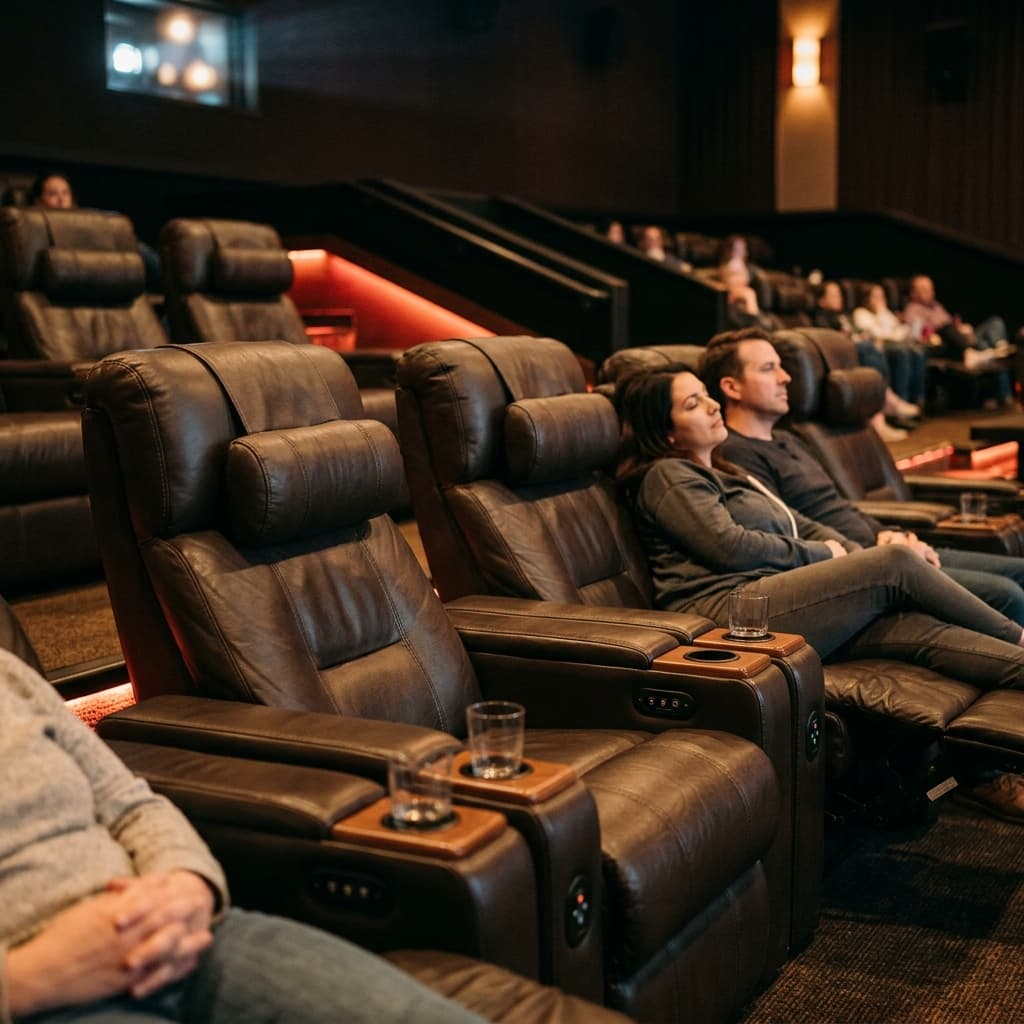
title: "Best Seats for Neck Comfort: Say Goodbye to Cinema Neck Strain" slug: "best-seats-for-neck-comfort" description: "A physical and geometrical breakdown of how seating distance and screen height affect neck tilt angles, and where to sit for a comfortable cinema experience." author: "CinemaView Editor" publishedAt: "2026-06-30" category: "Guides" tags: ["Comfort", "Seating", "Guides", "Health"] keywords: ["best seats for neck comfort", "cinema neck strain", "avoid neck pain movie theater", "how to sit in cinema"] image: "/images/blog/best-seats-for-neck-comfort.png" imageAlt: "A premium photograph of high-end leather cinema recliners showing people comfortable in a movie theater" breadcrumbLabel: "Neck Comfort Guide" relatedSlugs:
- movie-theater-geometry-explained
- worst-seats-in-movie-theater faqs:
- question: "Why does my neck hurt after watching a movie?" answer: "Your neck hurts because you sat too close to the screen, forcing you to tilt your head backward at an angle greater than 15 degrees for an extended period."
- question: "Which row is best to avoid neck pain?" answer: "Aim for the upper-middle rows, usually rows 8 through 12 in standard 15-row theaters, where the screen center is aligned closer to your natural eye level."
We've all been there: you arrive late to a blockbuster movie, and the only available tickets are in the front three rows. You spend the next two and a half hours looking straight up at a massive screen, leaving the theater with a stiff neck and a headache.
Neck strain is the most common physical complaint of cinema-goers. Fortunately, with a basic understanding of viewing geometry, you can choose seats that protect your neck and spine.
The 15-Degree Vertical Sightline Rule
To understand neck comfort, we must look at human ergonomics. Standard body mechanics dictate that the human head rests naturally in a position where the eyes look straight ahead or slightly downward (about 10 to 15 degrees below the horizontal line).
According to professional theater design standards set by SMPTE and THX:
- Maximum Tilt: The vertical angle from your eyes to the top of the screen should not exceed 35 degrees.
- Optimal Comfort: For long-term neck comfort, the vertical tilt to the top of the screen should not exceed 15 degrees.
If you sit too close (e.g., rows A through C), the vertical angle can reach 35 to 45 degrees, forcing your neck muscles to work overtime to keep your head tilted back.
Theater Rows compared by Comfort
The table below breaks down the comfort level and neck strain risk across different sections of a typical 15-row movie theater.
| Section | Rows | Average Vertical Tilt Angle | Neck Comfort Rating |
|---|---|---|---|
| Front Row (Gravel Row) | Rows 1 - 3 | 35 - 45° | Poor (Severe Strain) |
| Lower Middle | Rows 4 - 6 | 20 - 30° | Moderate (Mild Strain) |
| The Sweet Spot | Rows 7 - 10 | 10 - 15° | Excellent (Neutral Neck) |
| Upper Middle | Rows 11 - 13 | 5 - 10° | Excellent (Relaxed Neck) |
| Back Rows | Rows 14 - 15 | 0 - 5° | Good (Slight downward angle) |
To understand how the seating slope interacts with these comfort ratings, read our Ultimate Guide to Movie Theater Geometry.
Pros & Cons of Recliner Seats for Neck Comfort
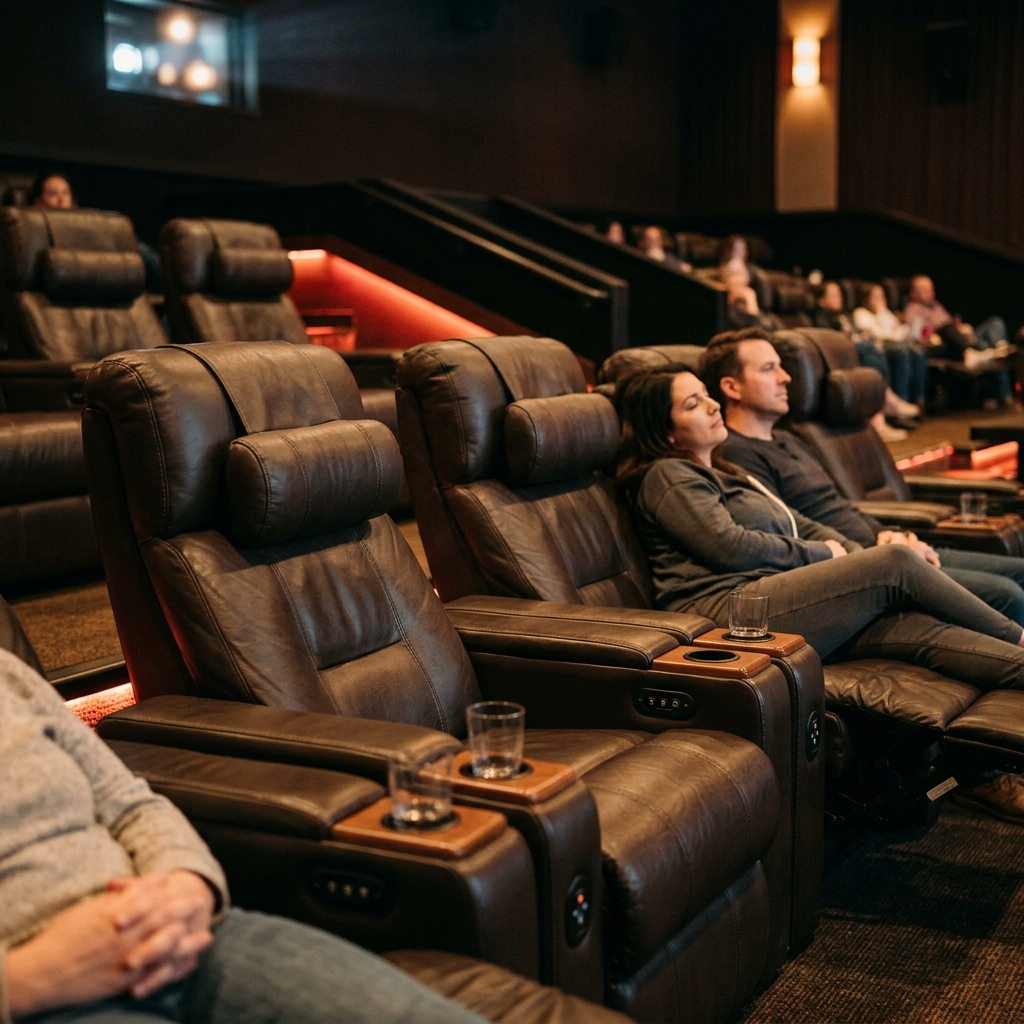
Many modern theater chains like AMC, Regal, and PVR have replaced traditional static seats with luxury plush recliners.
- •Reclining shifts your body weight back, naturally aligning your neck to look upward
- •Allows you to sit slightly closer to the screen without experiencing neck strain
- •Provides plush headrests and leg rests for full-body orthopedic support
- •Reclined seats take up more space, reducing the overall sweet spot seating area in the hall
- •Can occasionally cause your head to tilt too far forward if not adjusted properly
Tips for Avoiding Cinema Neck Pain
If you are forced to sit closer to the screen, use these strategies to mitigate neck pain:
- Fully Recline: If the theater has recliners, push the seat back as far as possible to change your body's axis.
- Support Your Head: Use a rolled-up jacket or travel pillow behind your neck to fill the gap and keep your spine aligned.
- Choose Stadium Seating: Always book tickets in theaters with steep stadium seating ruts, as they elevate you higher relative to the screen.
Summary
To guarantee a pain-free movie night, avoid the front rows entirely. Always aim for the two-thirds back row (Rows 8-11) to keep the screen in your natural line of sight. Ready to preview your seat before booking? Try our interactive seat picker!
CinemaView Editor
Editor & Expert Reviewer
Cinema seat expert and audio-visual enthusiast at CinemaView, dedicated to helping moviegoers find the perfect viewing spot.
Related Guides & Articles
The Ultimate Guide to Movie Theater Geometry
Discover the mathematical and geometric principles that govern perfect cinema seats, including viewing angles, sightlines, and sound acoustics.
Worst Seats in a Movie Theater (and How to Avoid Them)
The seats that quietly ruin a movie, front row, far-side aisles, dead-back, and under-speaker seats, why they're bad, and the simple rule for avoiding them.