
Table of Contents
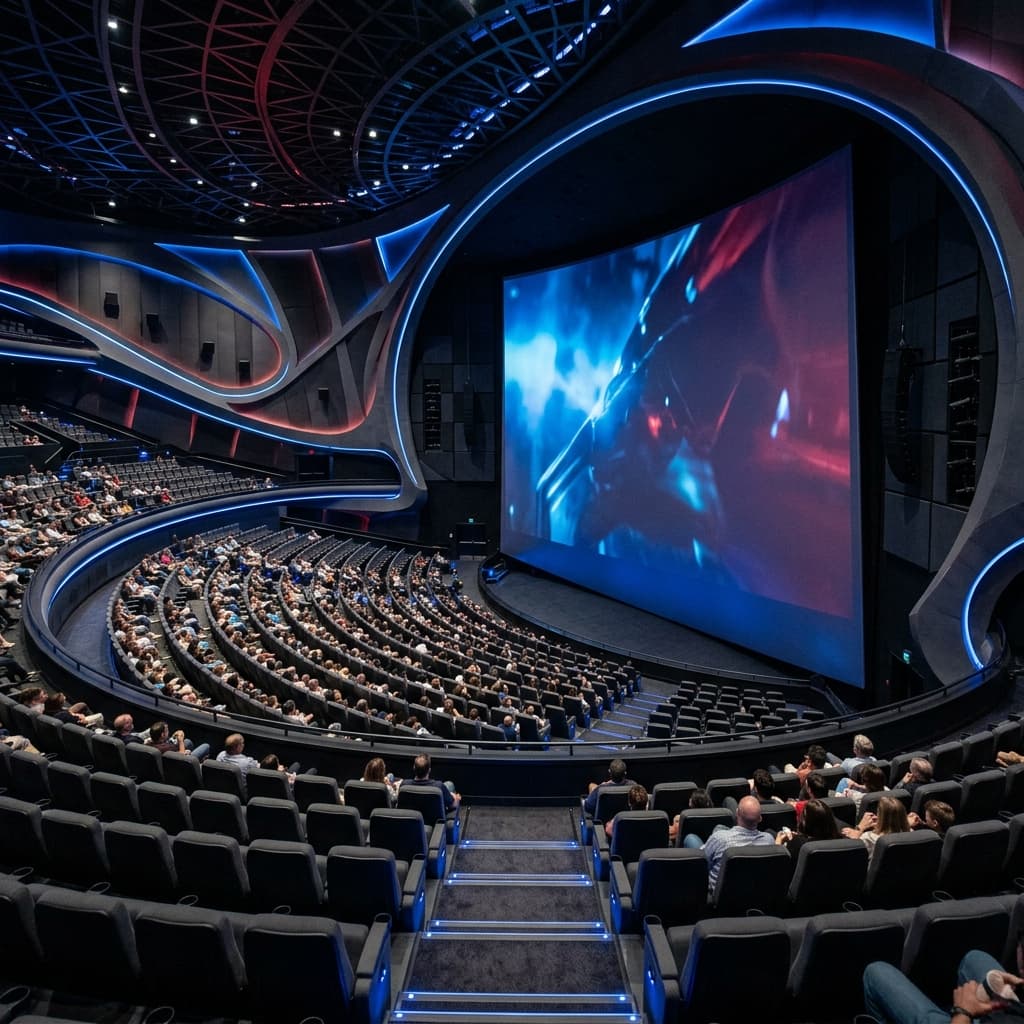
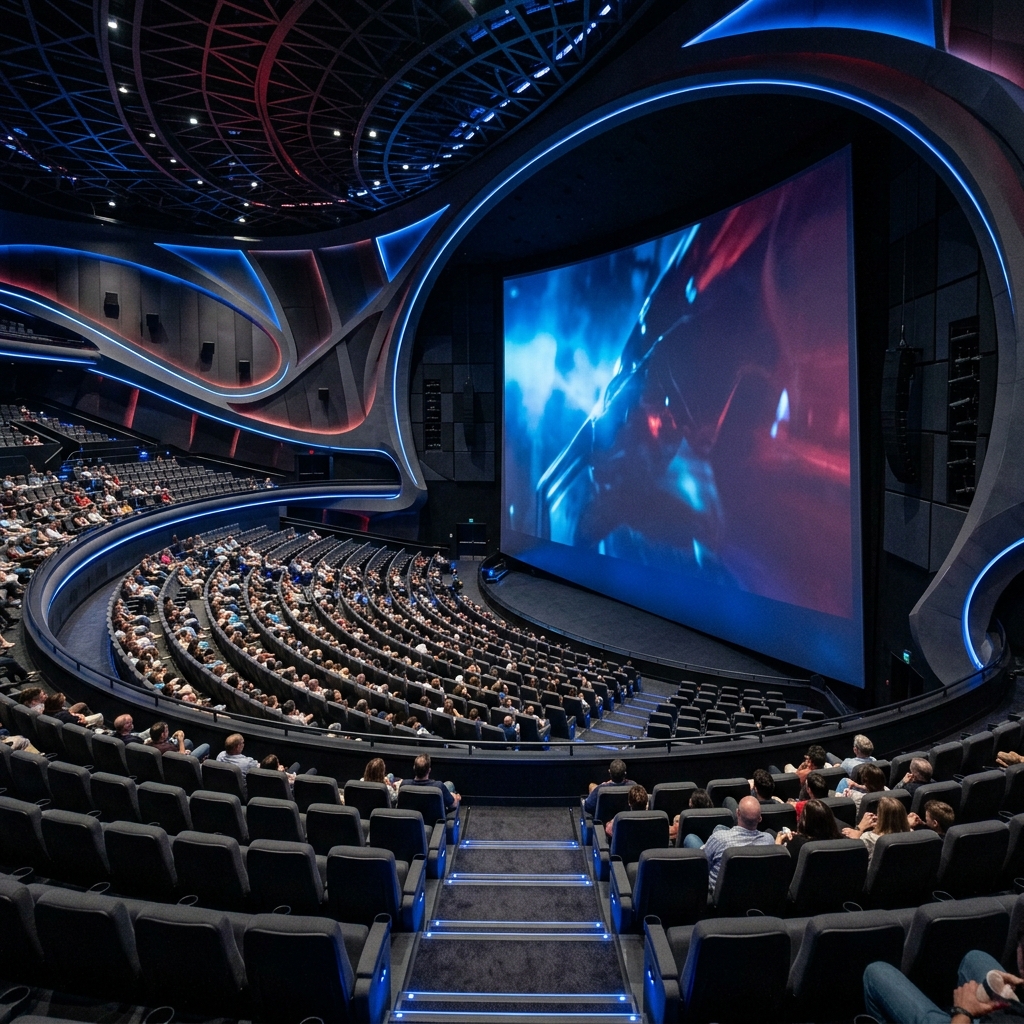
title: "The Science Behind IMAX Viewing Angles: Engineering Immersion" slug: "science-behind-imax-viewing-angles" description: "An in-depth look at how IMAX engineers screen curvature, seating rake, and wide field-of-view angles to maximize cinema immersion." author: "CinemaView Editor" publishedAt: "2026-06-30" category: "Science & Specs" tags: ["IMAX", "Viewing Angle", "Immersion", "Specs"] keywords: ["IMAX viewing angle", "IMAX field of view", "IMAX screen curvature", "cinematic immersion"] image: "/images/blog/science-behind-imax-viewing-angles.png" imageAlt: "A wide panoramic architectural photo of a giant curved blue/red lit IMAX theater screen and seats" breadcrumbLabel: "IMAX Angles Science" relatedSlugs:
- best-seat-in-imax
- understanding-imax-aspect-ratios faqs:
- question: "What is the typical IMAX viewing angle?" answer: "A standard IMAX seat targets a horizontal viewing angle between 60 to 80 degrees, significantly wider than the 30 to 40 degrees found in standard auditoriums."
- question: "Why are IMAX screens curved?" answer: "IMAX screens are curved to keep every point of the massive screen at an equal distance from your eyes, maintaining focus, bright contrast, and reducing geometric distortion."
When you walk into an IMAX theater, the first thing you notice is the scale. The screen is massive, stretching from floor to ceiling and wall to wall. But the real magic of IMAX isn't just screen size—it is the seating geometry and viewing angles designed to pull you directly into the film.
Let's explore the science and mathematics behind how IMAX engineers achieve maximum cinematic immersion.
The Human Field of View (FOV)
To understand IMAX, we must first look at human biology. The human visual system has a total horizontal field of view of about 200 degrees. However:
- 3D / Depth Perception: Occurs in the central 120 degrees where our eyes overlap.
- Peripheral Vision: Detects motion and context outside of this central zone.
A standard cinema screen only fills about 30 to 40 degrees of your horizontal field of view. This means you are highly aware of the walls, exit signs, and floor of the auditorium.
IMAX, on the other hand, is designed to fill 60 to 80+ degrees of your field of view from the sweet spot. By taking over your peripheral vision, the theater room disappears, convincing your brain that you are moving within the scene.
Key Design Factors of IMAX Auditoriums
IMAX engineers control every aspect of the auditorium to ensure consistent viewing angles:
| Design Parameter | Standard Cinema | IMAX Auditorium | Immersion Impact |
|---|---|---|---|
| Horizontal Field of View (FOV) | 30 - 40 degrees | 60 - 80 degrees | Dominates peripheral vision |
| Screen Distance | Further away | Brought much closer to seating | Increases screen scale |
| Screen Shape | Flat | Curved & Cylindrical | Uniform brightness & focus |
| Seating Rake (Slope) | Flatter (10-15°) | Steep Stadium (25-30°+) | Completely clear sightlines |
To see how these parameters compare with general multiplex sightlines, check out our Ultimate Guide to Movie Theater Geometry.
The Importance of Screen Curvature
Why are IMAX screens curved? When a screen is extremely wide and flat, the edges are further from your eyes than the center. This causes two problems:
- Focus Fall-off: The edges of the image can look slightly soft or out of focus.
- Keystoning: The image stretches at the outer boundaries.
By curving the screen in a cylindrical shape toward the audience, IMAX ensures that the distance from your eyes to any point on the screen is roughly equal. This keeps the image sharp, bright, and uniform across the entire surface. Learn more about the technical details on the official IMAX Technology Hub.
Pros & Cons of the IMAX Auditorium Design
IMAX's aggressive seating layout delivers unmatched immersion, but it comes with specific trade-offs.
- •Industry-leading horizontal and vertical immersion
- •Curved screen keeps brightness uniform across the entire surface
- •Steep seating rake prevents viewers in front from blocking your sightlines
- •Front row seats are extremely uncomfortable due to the close screen distance
- •Audio can feel overpowering if you sit too close to the rear surround speakers
Conclusion
IMAX viewing angles are a masterclass in visual engineering. By pushing the seating rows closer and curving the giant screen, IMAX creates a field of view that matches human biology, turning passive viewing into an active sensory experience. To find the rows that hit this sweet spot perfectly, read our guide on the Best Seats in IMAX.
CinemaView Editor
Editor & Expert Reviewer
Cinema seat expert and audio-visual enthusiast at CinemaView, dedicated to helping moviegoers find the perfect viewing spot.
Related Guides & Articles
Best Seat in IMAX: Complete Seating Guide
Find the best seat in an IMAX theater. Learn where to sit for optimal viewing angles, audio coverage, and immersion across IMAX Laser, GT, and Digital formats.
Understanding 1.43:1 vs 1.90:1 IMAX Formats
IMAX's two signature aspect ratios explained: true 1.43:1 film vs full 1.90:1 digital, the expanding-frame effect, and how each one changes where you should sit.