
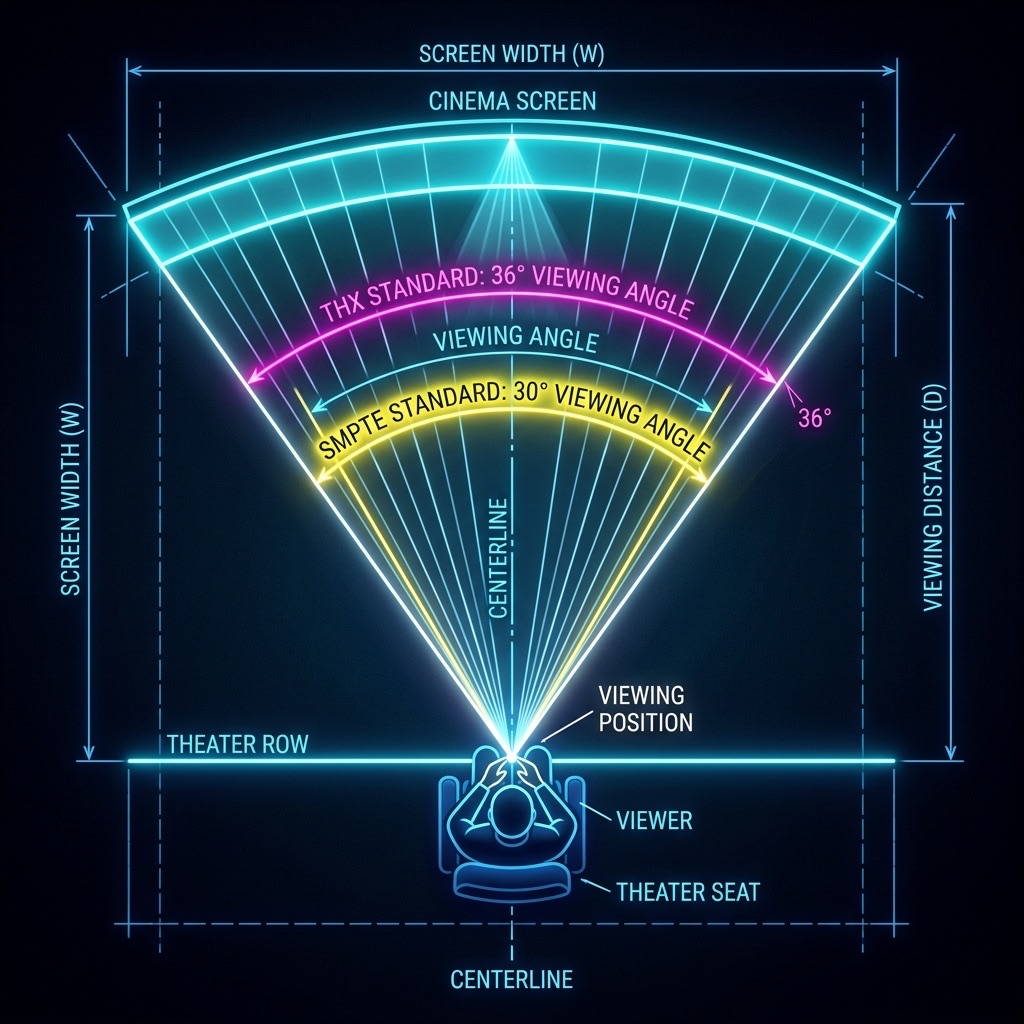
Cinema-induced motion sickness affects approximately 1 in 3 people at some point during their moviegoing life — and up to 10% of viewers experience it regularly. It's not weakness, it's not rare, and — most importantly — it's almost entirely preventable with the right seat selection.
This guide explains exactly why cinema causes motion sickness, which formats and film types are highest risk, and — most practically — exactly where to sit to enjoy movies without any discomfort.
Why Cinema Causes Motion Sickness
Motion sickness in any context — cars, boats, VR — stems from a single core conflict: what your eyes see and what your inner ear (vestibular system) detects disagree.
In a car, your eyes see a stationary interior while your body feels movement. In cinema, the reverse happens: your eyes see fast, sweeping camera movement while your body stays completely still in a chair. This visuo-vestibular conflict triggers the same nausea response in the brain as real motion sickness.
The severity depends on three factors:
- How much of your visual field the screen occupies (more screen coverage = stronger motion signal to the brain)
- How rapidly the on-screen content moves (fast-panning cameras, action sequences, and found-footage films are highest risk)
- Individual susceptibility (some people's vestibular systems are simply more sensitive)
Seat selection primarily addresses Factor 1 — where you sit directly determines how much of your visual field the screen fills.
The Seat Selection Rule
The fundamental rule for motion sickness prevention is:
The screen should fill no more than 40–45° of your total horizontal visual field.
Human horizontal visual field is approximately 180°. At 40–45° of screen coverage, your brain registers the on-screen content as "something in front of me" rather than "the entire environment I'm in." Once screen coverage exceeds 60–70° of your field, the vestibular conflict intensifies significantly.
| Row Position | Approx. Screen Coverage | Motion Sickness Risk |
|---|---|---|
| First 10% (very front) | 100–120° (screen fills and exceeds natural FOV) | Very High — avoid completely |
| 10–25% from front | 70–90° | High — uncomfortable for most susceptible viewers |
| 25–45% from front | 50–70° | Moderate — tolerable for mild sufferers with aisle seat |
| 45–65% from front (sweet zone) | 30–45° | Low — ideal for motion-sensitive viewers |
| 65–80% from front | 20–35° | Very Low — comfortable for almost all viewers |
| Back 20% | 15–25° | Minimal — but overall cinema experience reduced |
The sweet zone for motion sickness is approximately 45–65% back from the screen (or equivalently, 35–55% from the back wall). This is conveniently also close to the audio sweet spot for most auditoriums — a win-win.
Format-Specific Guidance
Standard Cinema (2D)
Lowest motion sickness risk of all commercial formats. Follow the general 45–65% back rule and sit in the centre column. The main risk factor here is the type of film rather than the format:
- Found-footage films (Blair Witch, Cloverfield-style): extremely high motion sickness risk at any seat. The handheld camera shaking was deliberately designed to simulate disorientation. Sit as far back as possible
- Action films with fast-cutting editing: medium risk
- Dramas, comedies, and slow-paced films: very low risk regardless of seat
3D Cinema
Add approximately one risk level to any standard cinema seat position. The vergence-accommodation conflict of 3D adds to the visuo-vestibular conflict — the combination is significantly worse than either alone.
If you are prone to motion sickness, always book the 2D version of a film when available. The experience difference is minor; the comfort difference is significant. For 3D specifically:
- Ensure your 3D glasses are correctly positioned — they should sit flat against your face with lenses centred on your pupils. Misaligned 3D glasses dramatically worsen symptoms
- Look away from the screen during particularly intense 3D action sequences rather than trying to "push through" the discomfort
IMAX
IMAX presents elevated motion sickness risk for two reasons:
- Larger screen coverage — even at the optimal viewing rows, an IMAX screen covers more of your field of view than a standard screen at the same relative position
- Taller aspect ratio — the 1.43:1 IMAX format extends vertically into your peripheral vision, adding a vertical dimension to the visual-vestibular conflict that standard 16:9 doesn't create
For IMAX, shift your optimal row position further back than standard:
| IMAX Format | Recommended Row Zone for Motion-Sensitive Viewers |
|---|---|
| True IMAX Laser GT (70–100 ft screens) | 55–70% from the front (middle-back zone) |
| IMAX Laser (standard commercial) | 50–65% from the front |
| IMAX Digital (smaller screens) | 45–60% from the front (similar to PLF standard) |
4DX
4DX is uniquely challenging for motion sickness because it adds physical movement to the visual motion. Paradoxically, this can help (eyes and body agree on the motion) or hurt (the combined stimulus overwhelms the vestibular system). It depends entirely on the individual.
General guidance for motion-sensitive viewers: Avoid 4DX entirely, or if you want to try it, book a back-row seat (physical motion intensity is approximately 20–30% lower in the back rows than the front) and take anti-nausea medication prophylactically.
ScreenX (270°)
ScreenX's side-wall projections create motion on both sides of your peripheral vision simultaneously — this is much more disorienting than standard front-screen content during active ScreenX sequences. If you are prone to motion sickness, ScreenX is not recommended, especially for action-heavy films with native ScreenX sequences.
If you attend a ScreenX screening regardless, choose a seat in the back 30% of the auditorium where the side walls are more distant and their motion occupies less of your peripheral vision.
Practical Tips Before and During the Film
Before the Film
- Eat light. A full stomach is more susceptible to nausea. Avoid very heavy meals within 2 hours of a showing
- Ginger supplements: 500–1000mg of ginger root capsules taken 30–60 minutes before the film provides modest but measurable relief for motion sickness. Crystallised ginger also works
- Hydration: Dehydration worsens vestibular sensitivity. Drink water before the film
- Avoid alcohol: Even one drink significantly increases susceptibility
During the Film
- Focus on a fixed point during intensely moving sequences — the centre of the screen rather than following camera movement helps
- Look at the horizon equivalent — the horizontal centre line of the screen, similar to the maritime advice to look at the horizon during seasickness
- Keep your head still: Head movement during on-screen motion amplifies the conflict. Rest your head against the seat back
- Close your eyes during the most intense sequences rather than trying to push through escalating nausea — 20 seconds of closed eyes during a fast-moving scene can reset symptoms
If Symptoms Begin
- Exit to the lobby immediately if nausea becomes significant. Symptoms that aren't addressed tend to escalate rather than resolve during the film
- Fresh air and a dark, stationary environment (lobby) typically resolve symptoms within 5–10 minutes
- Cool water or ginger ale can help settle an irritated stomach
Choosing Your Format Wisely
The simplest motion sickness prevention strategy is choosing the right format for your sensitivity level:
| Your Sensitivity Level | Recommended Formats | Formats to Avoid |
|---|---|---|
| Mild (occasional symptoms) | Standard 2D, PLF, IMAX (back zone) | Front rows of any format |
| Moderate (regular symptoms) | Standard 2D from back half only | IMAX front/middle, 3D, ScreenX |
| Severe (symptoms in most action films) | Standard 2D, back rows only | IMAX, 3D, ScreenX, 4DX |
| Extreme (symptoms in all cinema) | Standard 2D, row 65–75%, centre | Virtually all premium formats |
The right cinema seat is the most effective tool available for managing motion sickness — more effective than medication for most people, completely free, and instantly actionable. Use our seat finder to identify the exact optimal rows at your local cinema based on your sensitivity level and chosen format.
CinemaView Editor
Editor & Expert Reviewer
Cinema seat expert and audio-visual enthusiast at CinemaView, dedicated to helping moviegoers find the perfect viewing spot.
Related Guides & Articles
Best Seats for Neck Comfort: Say Goodbye to Cinema Neck Strain
A physical and geometrical breakdown of how seating distance and screen height affect neck tilt angles, and where to sit for a comfortable cinema experience.
The Science Behind IMAX Viewing Angles: Engineering Immersion
An in-depth look at how IMAX engineers screen curvature, seating rake, and wide field-of-view angles to maximize cinema immersion.
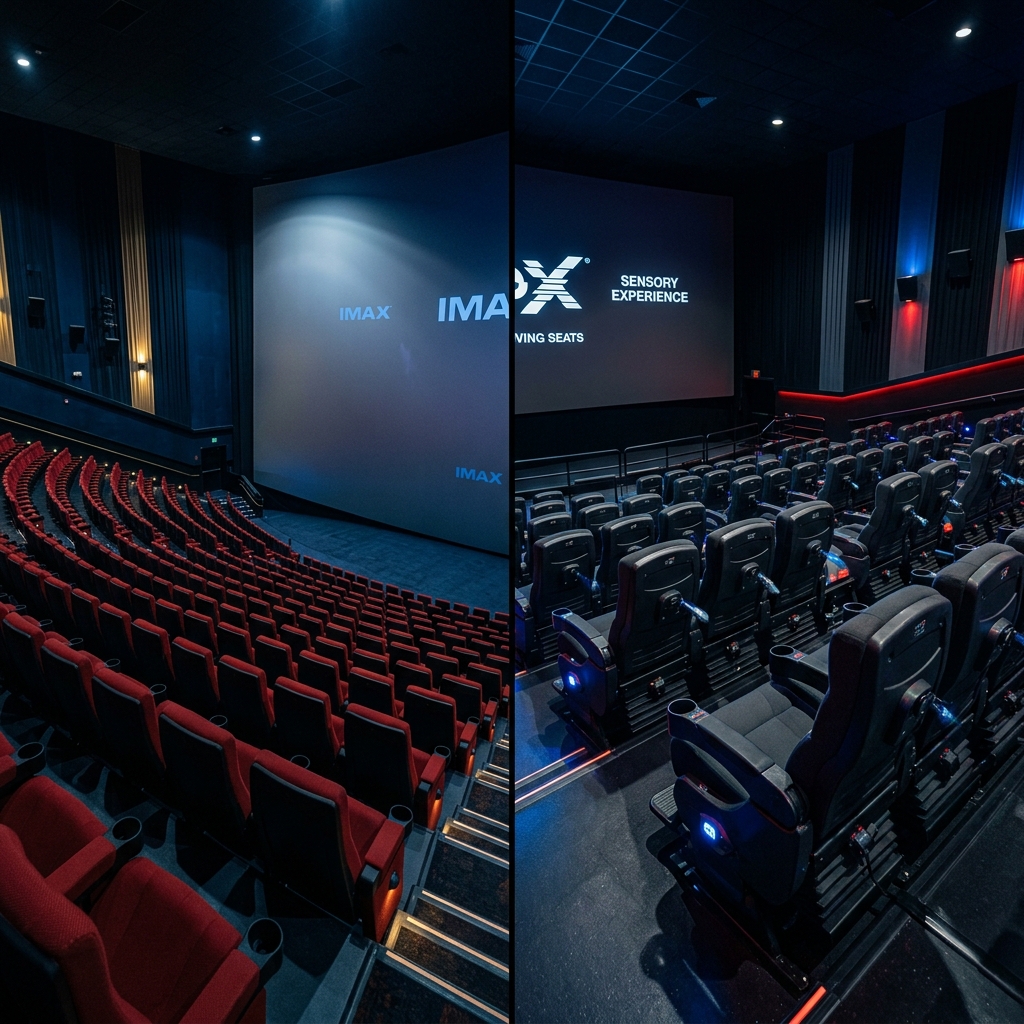
IMAX vs. 4DX: Which Premium Cinema Format is Worth It?
A comprehensive comparison of IMAX and 4DX cinema formats — covering screen size, audio, motion effects, seat comfort, and which format is better for different types of films.