Marco-Hugo Landeta Vacas
Written on 6/24/2026
(CASTELLANO) El teléfono del señor Harrigan parte de una idea muy de Stephen King: un chico solitario, un anciano misterioso, una relación extraña, un objeto cotidiano convertido en puerta hacia algo imposible y una sensación de culpa que empieza a crecer poco a poco. Sobre el papel, tenía todo para ser una historia pequeña, inquietante y muy incómoda. Pero la película nunca termina de cruzar del todo esa puerta.
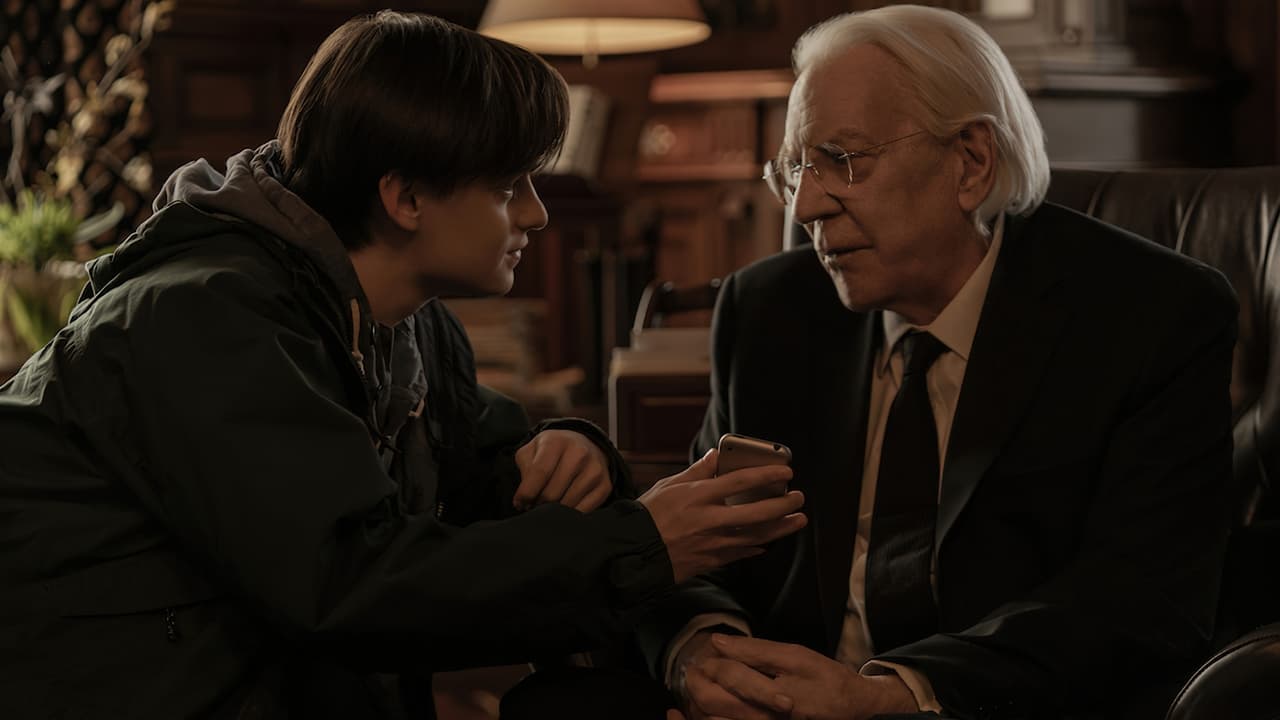
Lo curioso es que no funciona mal como drama. La relación entre Craig y el señor Harrigan tiene interés, sobre todo por la presencia de Donald Sutherland, que llena cada escena con muy poco. Su personaje tiene gravedad, distancia y una especie de amenaza tranquila incluso antes de que ocurra nada sobrenatural. Jaeden Martell también está bien, con esa mezcla de fragilidad y curiosidad que necesita el protagonista.
El problema es que la película parece venderse como terror, pero luego no da verdadero miedo. Hay una promesa constante de algo oscuro, de una conexión imposible desde el más allá, de una especie de teléfono convertido en neotabla ouija, pero todo se queda en un terreno demasiado moderado. No hay sustos fuertes, pero tampoco una atmósfera de amenaza suficiente para compensarlo. No hacía falta que fuera una película de gritos; bastaba con que fuera más perturbadora.
Lo más interesante está en la idea moral: qué pasa cuando alguien descubre que puede pedir venganza sin mancharse directamente las manos. Ahí sí hay algo potente. Craig no es un monstruo, pero empieza a entender que el dolor, la rabia y el deseo de castigo pueden abrir una puerta muy peligrosa. La película apunta a esa zona incómoda, pero no la aprieta del todo. Parece que quiere hablar de culpa, tecnología, soledad y muerte, pero lo hace con demasiada prudencia.
También se nota que el relato quizá funcionaba mejor en papel. King suele ser muy bueno en esas historias donde el horror nace de una idea sencilla y se va metiendo en la cabeza del personaje. En cine, sin embargo, El teléfono del señor Harrigan se queda algo plana. Tiene elegancia, tiene buenos actores y tiene una premisa con gancho, pero le falta ritmo, tensión y una imagen verdaderamente memorable que la saque de la corrección.
Aun así, se puede ver. No es un desastre, ni mucho menos una de esas adaptaciones de King que dan vergüenza. Es más bien una película correcta, algo decepcionante, que funciona mejor si uno no espera terror puro. Como drama sobrenatural con moraleja, tiene momentos. Como película de miedo, se queda corta.
El teléfono del señor Harrigan tenía una llamada muy prometedora, pero al otro lado de la línea había menos de lo que esperábamos. Una historia interesante, bien interpretada, con un punto inquietante, pero demasiado tímida para dejar huella. Se ve, se entiende lo que quiere hacer, pero cuando termina queda la sensación de que podía haber asustado, dolido y removido bastante más.
(ENGLISH) Mr. Harrigan’s Phone starts from a very Stephen King-like idea: a lonely boy, a mysterious old man, a strange relationship, an everyday object turned into a doorway to something impossible, and a sense of guilt that slowly begins to grow. On paper, it had everything needed to become a small, unsettling and deeply uncomfortable story. But the film never fully crosses that doorway.
The curious thing is that it does not work badly as a drama. The relationship between Craig and Mr. Harrigan has interest, especially thanks to Donald Sutherland, who fills every scene with very little. His character has gravity, distance and a kind of quiet menace even before anything supernatural happens. Jaeden Martell is also good, with the mix of fragility and curiosity the protagonist needs.
The problem is that the film seems to sell itself as horror, but it never becomes truly scary. There is a constant promise of something dark, of an impossible connection from beyond the grave, of a phone turned into a kind of neo-Ouija board, but everything remains too restrained. There are no strong scares, but there is not enough atmosphere of threat to make up for that either. It did not need to be a jump-scare film; it only needed to be more disturbing.
The most interesting part is the moral idea: what happens when someone discovers they can ask for revenge without directly getting their hands dirty. That is where the film has something powerful. Craig is not a monster, but he begins to understand that pain, anger and the desire for punishment can open a very dangerous door. The film points toward that uncomfortable place, but it never presses hard enough. It seems to want to talk about guilt, technology, loneliness and death, but it does so too cautiously.
You can also feel that the story may have worked better on the page. King is often very strong in those tales where horror grows from a simple idea and slowly enters the character’s mind. On screen, however, Mr. Harrigan’s Phone feels a little flat. It has elegance, good actors and a hooky premise, but it lacks pace, tension and a truly memorable image to lift it beyond correctness.
Even so, it is watchable. It is not a disaster, nor one of those embarrassing King adaptations. It is more of a correct but somewhat disappointing film, one that works better if you are not expecting pure horror. As a supernatural moral drama, it has moments. As a scary film, it falls short.
Mr. Harrigan’s Phone had a very promising call, but there was less on the other end of the line than we hoped. An interesting, well-acted story with a slightly unsettling edge, but too timid to leave a mark. It can be watched, and you understand what it is trying to do, but when it ends, the feeling remains that it could have been much scarier, more painful and more disturbing.