Marco-Hugo Landeta Vacas
Written on 6/25/2026
(CASTELLANO) Corazones en Atlántida es una de esas adaptaciones de Stephen King que no van por el camino del terror evidente, sino por otro mucho más melancólico: la infancia perdida, los adultos que no protegen, la aparición de alguien extraño que te cambia la vida y esa sensación de que el mundo es mucho más oscuro de lo que un niño puede entender. Se nota que viene de King, pero de ese King más íntimo, más triste, más interesado en el recuerdo que en el susto.
La película me ha gustado bastante. Tiene algo muy clásico, muy de relato contado desde la memoria, con un hombre adulto que vuelve al pasado y recuerda un verano decisivo. Ese recurso puede ser sentimental, claro, y la película a veces se acerca a ese terreno, pero también tiene una sinceridad que funciona. No busca asustar tanto como dejar una sensación de pérdida, de descubrimiento y de amenaza escondida bajo una apariencia tranquila.
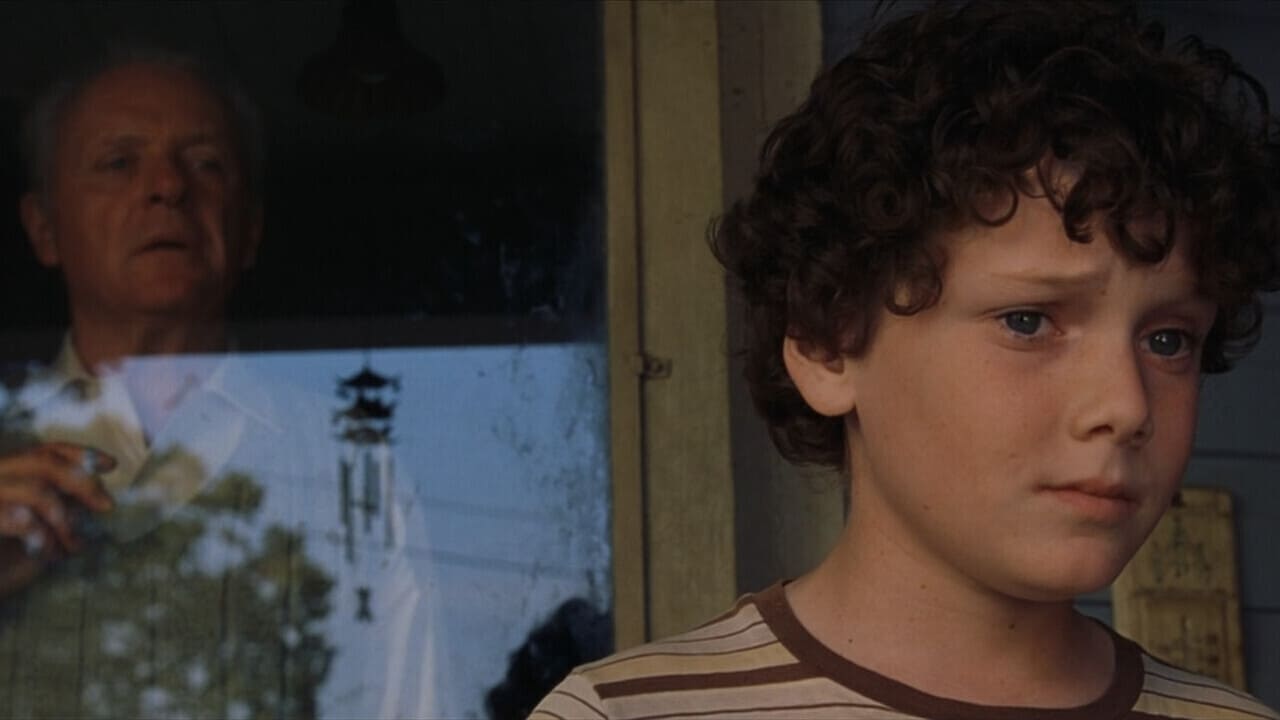
Anthony Hopkins está magnífico como Ted Brautigan. Tiene esa mezcla de bondad, misterio, inteligencia y cansancio que hace que el personaje resulte fascinante sin necesidad de explicarlo todo. Ted no es simplemente un anciano amable ni un mago disfrazado de vecino. Es alguien que parece llevar demasiado tiempo huyendo, alguien que sabe cosas que no debería saber y que, aun así, encuentra en Bobby una forma de afecto limpio, casi paternal.
Y Anton Yelchin está especialmente bien. Da mucha pena verlo ahora, sabiendo que murió tan joven, porque aquí ya tenía una sensibilidad enorme. Su Bobby es curioso, vulnerable, despierto, lleno de hambre emocional. No sobreactúa nunca. Mira, escucha, absorbe. Consigue que la relación con Ted sea creíble y que la película tenga corazón. Los demás también están muy bien: Hope Davis como madre egoísta y frustrada, David Morse en la parte adulta, Mika Boorem como parte esencial de ese recuerdo de infancia.
Lo interesante es que Corazones en Atlántida también puede leerse como una crítica a una época de sospecha, vigilancia y persecución. Los “hombres bajos” que buscan a Ted tienen algo de amenaza fantástica, pero también remiten a un clima muy reconocible: el miedo al diferente, el control, la caza de quienes se salen de la norma, la sombra de la persecución política y de esa América que convirtió la sospecha en sistema. La película no lo convierte en discurso frontal, pero está ahí, flotando por debajo.
Quizá su mayor defecto es que le falta algo más de intensidad. A ratos es demasiado suave, demasiado contenida, y puede dar la impresión de que no termina de aprovechar toda la rareza del material original. Tiene misterio, emoción y buena atmósfera, pero no siempre alcanza la fuerza que promete. En ese sentido, no está al nivel de las grandes adaptaciones de King sobre la infancia, como Cuenta conmigo, aunque comparta con ella ese tono de recuerdo doloroso.
Aun así, es una película bonita, bien interpretada y con poso. Habla de cómo algunos encuentros de la infancia nos acompañan toda la vida, de cómo hay adultos que nos salvan un poco aunque no puedan salvarse a sí mismos, y de cómo el miedo puede entrar en una casa sin hacer ruido. Corazones en Atlántida no es perfecta, pero tiene alma. Y eso, en una adaptación de King, ya es mucho.
(ENGLISH) Hearts in Atlantis is one of those Stephen King adaptations that does not follow the path of obvious horror, but something much more melancholic: lost childhood, adults who fail to protect, the arrival of a mysterious person who changes your life, and the feeling that the world is far darker than a child can understand. You can feel King behind it, but this is the more intimate, sadder King, more interested in memory than in scares.
I liked the film quite a lot. It has something very classic about it, like a story told from memory, with an adult man returning to the past and recalling a decisive summer. That device can become sentimental, of course, and the film sometimes gets close to that, but there is also a sincerity that works. It does not try so much to frighten as to leave a feeling of loss, discovery and hidden threat beneath a calm surface.
Anthony Hopkins is magnificent as Ted Brautigan. He has that mixture of kindness, mystery, intelligence and fatigue that makes the character fascinating without needing to explain everything. Ted is not simply a kind old man or a disguised magical figure. He is someone who seems to have been running for too long, someone who knows things he should not know and who nevertheless finds in Bobby a clean, almost paternal form of affection.
And Anton Yelchin is especially good. It is very sad to watch him now, knowing he died so young, because even here he already had enormous sensitivity. His Bobby is curious, vulnerable, alert and full of emotional hunger. He never overacts. He looks, listens and absorbs. He makes the relationship with Ted believable and gives the film its heart. The rest of the cast is very good too: Hope Davis as a selfish and frustrated mother, David Morse as the adult Bobby, Mika Boorem as an essential part of that childhood memory.
What is interesting is that Hearts in Atlantis can also be read as a criticism of an era of suspicion, surveillance and persecution. The “low men” who are looking for Ted have a fantasy threat around them, but they also evoke a very recognizable climate: fear of difference, control, the hunting of those who step outside the norm, the shadow of political persecution and of an America that turned suspicion into a system. The film does not turn this into a direct speech, but it is there, floating underneath.
Perhaps its main weakness is that it lacks a little more intensity. At times, it is too soft, too restrained, and it can feel as if it does not fully use the strangeness of the original material. It has mystery, emotion and good atmosphere, but it does not always reach the force it promises. In that sense, it is not on the level of the great King adaptations about childhood, such as Stand by Me, although it shares with it that tone of painful memory.
Still, it is a beautiful film, well acted and with feeling. It speaks about how certain childhood encounters stay with us for life, how some adults save us a little even if they cannot save themselves, and how fear can enter a house without making noise. Hearts in Atlantis is not perfect, but it has soul. And in a Stephen King adaptation, that already means a lot.