
When Homer Meets Nolan
Forty-four years after Kubrick adapted The Shining, thirty years after Spielberg made Schindler's List, twenty years after Nolan himself reinvented superhero cinema with The Dark Knight — something happens that feels genuinely unprecedented. A filmmaker takes humanity's oldest story, written 2,800 years ago, and decides to tell it using the most technologically advanced cinema format on earth.
Christopher Nolan's The Odyssey releases on July 17, 2026, and nothing about it is small.
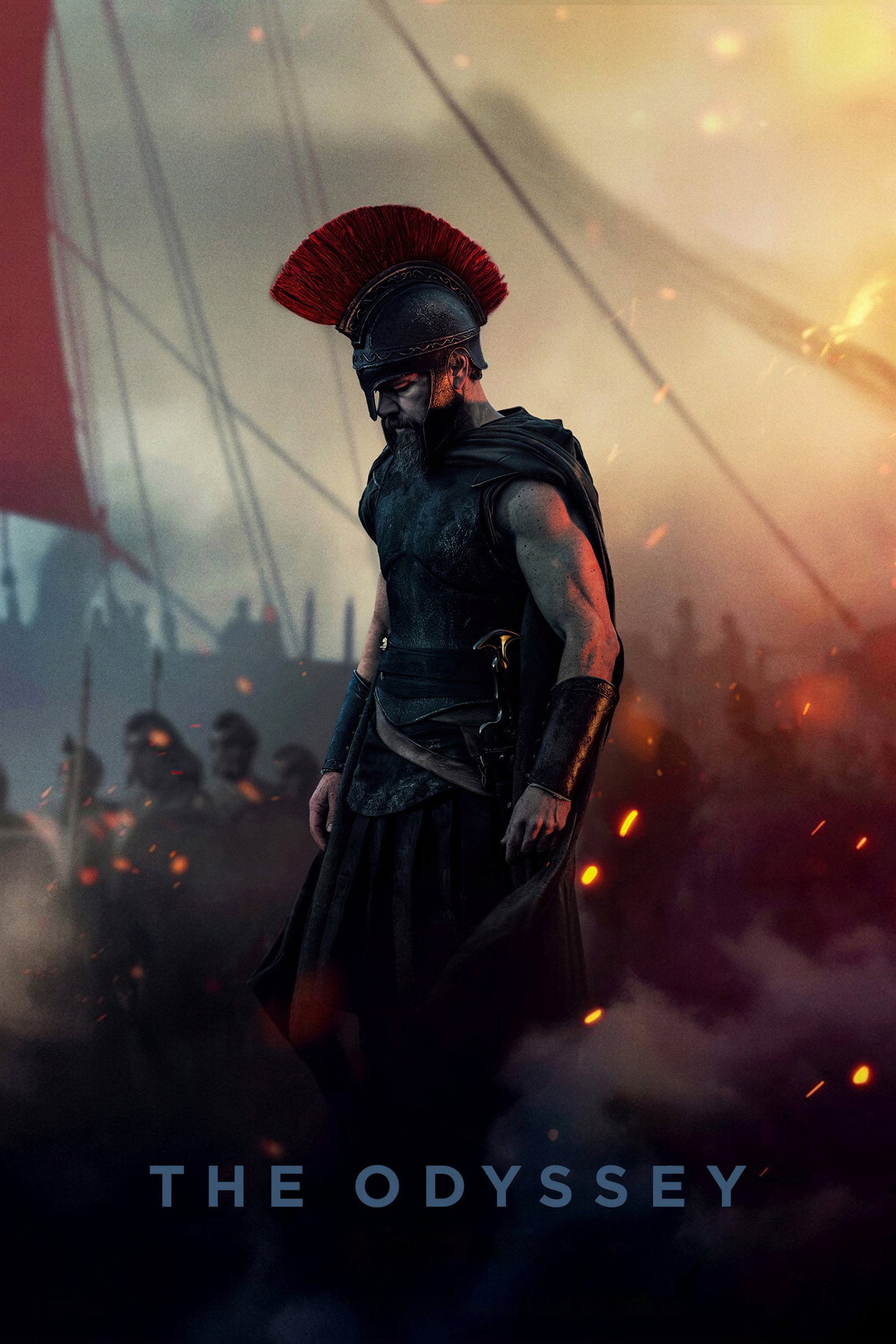
The film runs approximately 2 hours and 53 minutes. It was shot on location across multiple countries. It uses an ensemble cast so large that the credits alone run several minutes. And it is, by a wide margin, the most technically ambitious film Nolan has ever made — which, given his filmography includes Interstellar, Dunkirk and Oppenheimer, is a remarkable statement.
Homer's Epic: The Story That Never Gets Old
For those who last encountered the Odyssey in a school classroom, here is the essential narrative Nolan is adapting:
Following ten years of war at Troy, the legendary warrior-king Odysseus (ruler of the island of Ithaca) begins the journey home to his wife Penelope and son Telemachus. What should be a voyage of weeks stretches into a decade of supernatural obstacles, divine punishment, and human failure.
The obstacles he faces include:
- Polyphemus the Cyclops — a one-eyed giant, son of Poseidon, whose blinding by Odysseus triggers the god's wrath and defines the next ten years of suffering.
- Circe — a sorceress who transforms his crew into pigs and keeps Odysseus on her island for a year.
- The Sirens — creatures whose irresistible song lures sailors to their deaths on the rocks.
- Scylla and Charybdis — a six-headed monster and a whirlpool, between which Odysseus must navigate at catastrophic cost.
- The Land of the Dead — where Odysseus descends into the underworld to receive prophecy.
Meanwhile, back in Ithaca, Penelope fends off over a hundred suitors who are consuming Odysseus's palace, draining his kingdom's wealth, and pressuring her to declare him dead and remarry. Their leader, Antinous, is one of Greek literature's most vivid villains.
This is the story Nolan has chosen. Not because it is simple — it is not. But because it contains everything: war, love, grief, hubris, perseverance, divine injustice, and the primal human longing for home.
The Cast: A Constellation of Talent
| Actor | Character | Significance |
|---|---|---|
| Matt Damon | Odysseus, King of Ithaca | The heroic centre — cunning, flawed, magnificent |
| Anne Hathaway | Penelope, his queen | The film's emotional anchor across twenty years |
| Tom Holland | Telemachus, their son | Grows from boy to man searching for his father |
| Robert Pattinson | Antinous | Charismatic, dangerous leader of the suitors |
| Zendaya | Athena, goddess of wisdom | Divine protector and puppetmaster of Odysseus's fate |
| Charlize Theron | Circe, the sorceress | One of the film's most visually anticipated sequences |
| Lupita Nyong'o | Calypso, goddess of the island Ogygia | Where Odysseus is stranded for seven years |
| Jon Bernthal | Poseidon, god of the sea | The divine antagonist — raw, elemental, relentless |
| Samantha Morton | Supporting role | Details undisclosed |
This is the largest A-list ensemble Nolan has ever assembled. Every casting decision carries narrative weight — and his track record with actor performance (Inception, Dunkirk, Oppenheimer) suggests every one of them will deliver.
The Technology: History Is Made in IMAX
Here is why The Odyssey is a historic filmmaking landmark: it is the first feature film in history to be shot entirely on 15/70mm IMAX film cameras.
This matters enormously. Let us break down what it means in practice.
The 15/70mm IMAX film format uses a negative frame approximately ten times the size of standard 35mm film. The result is a resolution so fine that even in the largest IMAX Laser projection systems, the image never looks digital — it looks alive. Grain, texture, and depth combine to create a visual experience that no digital format currently replicates.
The problem historically was that these cameras are extraordinarily loud — they make a mechanical grinding noise that bleeds into audio recordings, making dialogue scenes impossible to shoot. For this reason, no director had ever attempted a full feature on the format.
Nolan and IMAX's engineering teams collaborated to develop a custom acoustic blimp — a soundproofing housing that encases the camera entirely, reducing its sound signature enough to record clean dialogue. This took years to engineer. It has never been done before.
The result: every frame of The Odyssey was captured in the highest-resolution, most visually rich format available to cinema.
| Cinema Format | The Odyssey Image | Vertical Frame | Nolan's Intent Fulfilled? |
|---|---|---|---|
| Standard DCP 2K/4K | Letterboxed 2.39:1 — black bars top & bottom | Loses 40% of frame | No |
| IMAX Digital (Xenon) | 1.90:1 expanded | +26% vertical vs standard | Partially |
| IMAX Laser (non-GT) | 1.90:1 with peak brightness | Strong improvement | Mostly |
| IMAX Laser GT | Full 1.43:1 aspect ratio | +40% vertical, maximum frame | Yes |
| IMAX 15/70mm Film | Full 1.43:1 at native resolution | As shot — uncompromised | Completely |
Find your nearest IMAX Laser GT or 15/70mm theatre using IMAX's official theatre finder. For seat selection once you've chosen your theatre, our IMAX best seat guide covers every key variable.
The Themes: Ancient and Eternal
What makes the Odyssey endure across 28 centuries of reading?
It is not the monsters. It is the question underneath the monsters: Who are you when no one is watching?
Odysseus is tested not by combat but by temptation. He could stay with Calypso on her paradise island forever — she offers immortality. He could accept Circe's pleasures indefinitely. He could stop fighting the gods' will. But something primal and inarticulate drives him toward Ithaca, toward Penelope, toward home — even when home has become more memory than place.
Nolan's filmography is built on similar obsessions. Memento: identity without memory. Inception: the architecture of desire and loss. Interstellar: the gravity of love across impossible distance. Oppenheimer: the weight of what we build.
The Odyssey is the natural culmination of these themes — the oldest story of a man trying to return to himself.
Production Scale: An Epic Shot Across the World
Filming took place across multiple countries — locations selected to represent the actual geography of Homer's ancient Mediterranean world. The Adriatic coast, the islands of Greece, the mountains of Turkey, the coasts of North Africa. Nolan refused digital backlot reconstruction for sequences that could be shot practically.
The production used more than 11 miles of 15/70mm IMAX film negative — a staggering quantity that underlines both the scale of the shoot and Rockstar's commitment to analogue capture in an era of digital-first production.
The Odyssey 2026 — CinemaView Assessment
- •The first film ever shot fully on 15/70mm IMAX — a technical and artistic landmark.
- •Christopher Nolan's largest and most personal ensemble cast to date.
- •Homer's Odyssey is the optimal source material for Nolan's themes of memory, time and homecoming.
- •A genuine must-see IMAX theatrical event — uniquely degraded on home viewing.
- •Matt Damon, Anne Hathaway and Robert Pattinson represent career-best material potential.
- •15/70mm projection theatres are extremely rare — most audiences will see a digital IMAX version.
- •A 2h 53m runtime with dense mythological content may challenge casual audiences.
- •The scale of the ensemble risks insufficient screen time for some of its stars.
The Bottom Line: You Have to See This in IMAX
The Odyssey is the rare film that is not merely better in IMAX — it is fundamentally different in IMAX versus everywhere else. Watching it on a standard screen removes 40% of the image Nolan captured. Watching it at home removes the communal silence, the immersive scale, and the audio environment that makes the Cyclops confrontation feel seismic.
This is a once-a-decade cinema experience. Treat it accordingly.
Book your IMAX seat now. Use our 3D Seat Simulator to preview your view. Read our IMAX aspect ratio guide to understand exactly what you gain from each format tier.
See you at the theatre on July 17.
CinemaView Team
Editor & Expert Reviewer
Cinema seat expert and audio-visual enthusiast at CinemaView, dedicated to helping moviegoers find the perfect viewing spot.
Related Guides & Articles
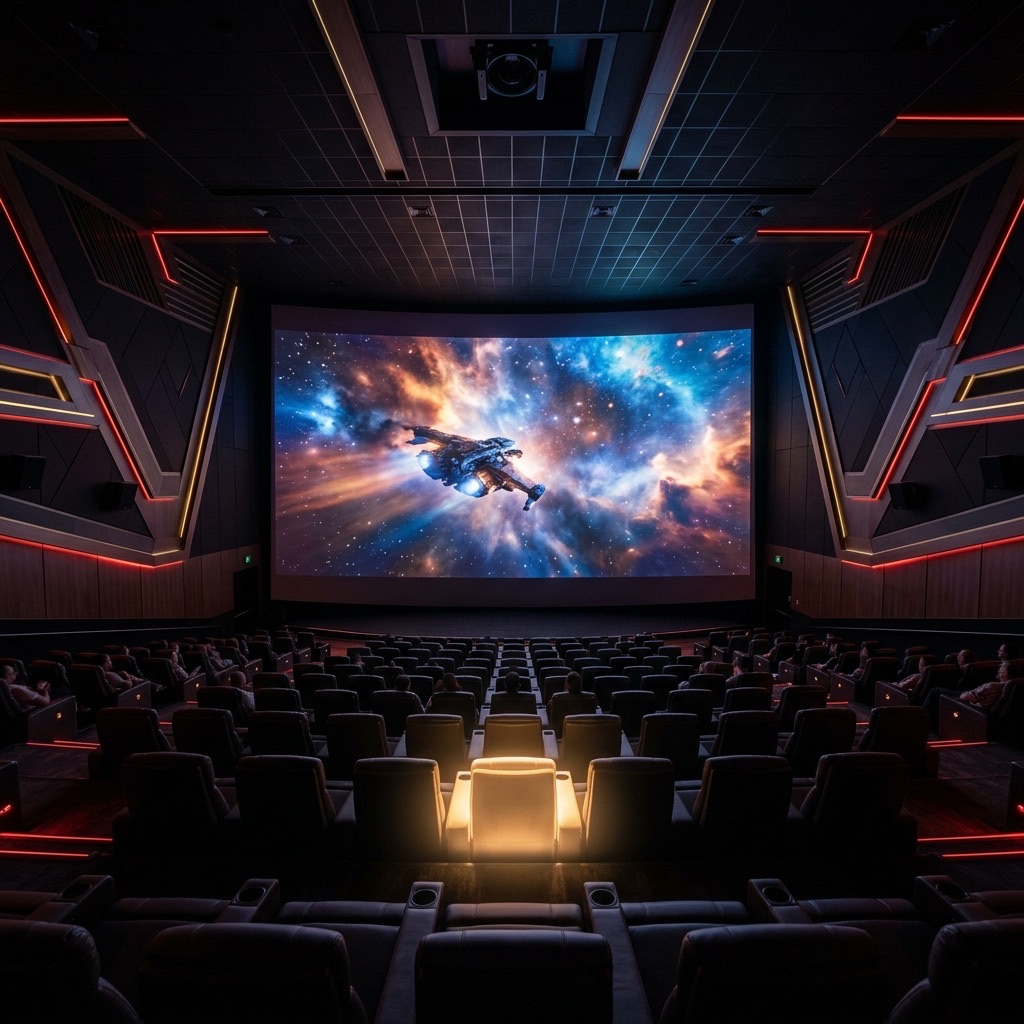
Best Seat in IMAX: Complete Seating Guide
Find the best seat in an IMAX theater. Learn where to sit for optimal viewing angles, audio coverage, and immersion across IMAX Laser, GT, and Digital formats.
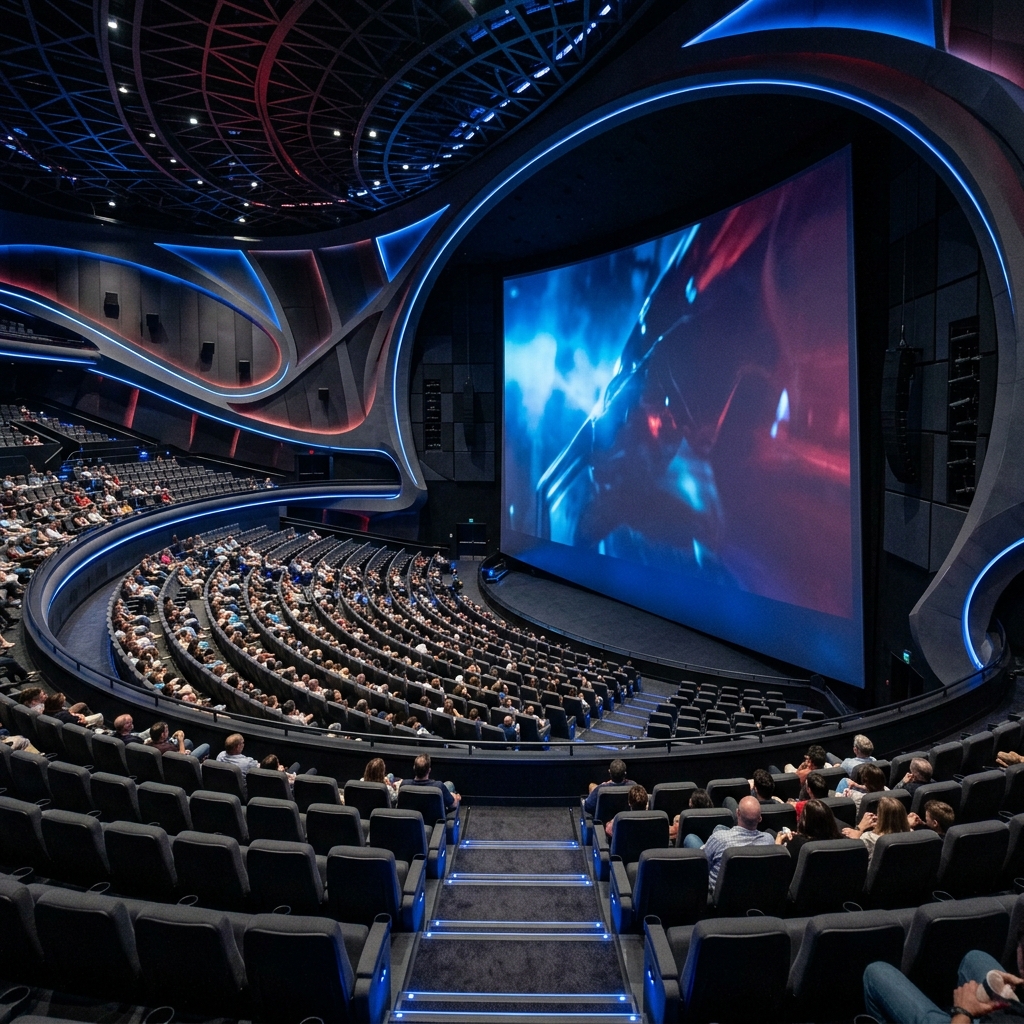
The Science Behind IMAX Viewing Angles: Engineering Immersion
An in-depth look at how IMAX engineers screen curvature, seating rake, and wide field-of-view angles to maximize cinema immersion.