
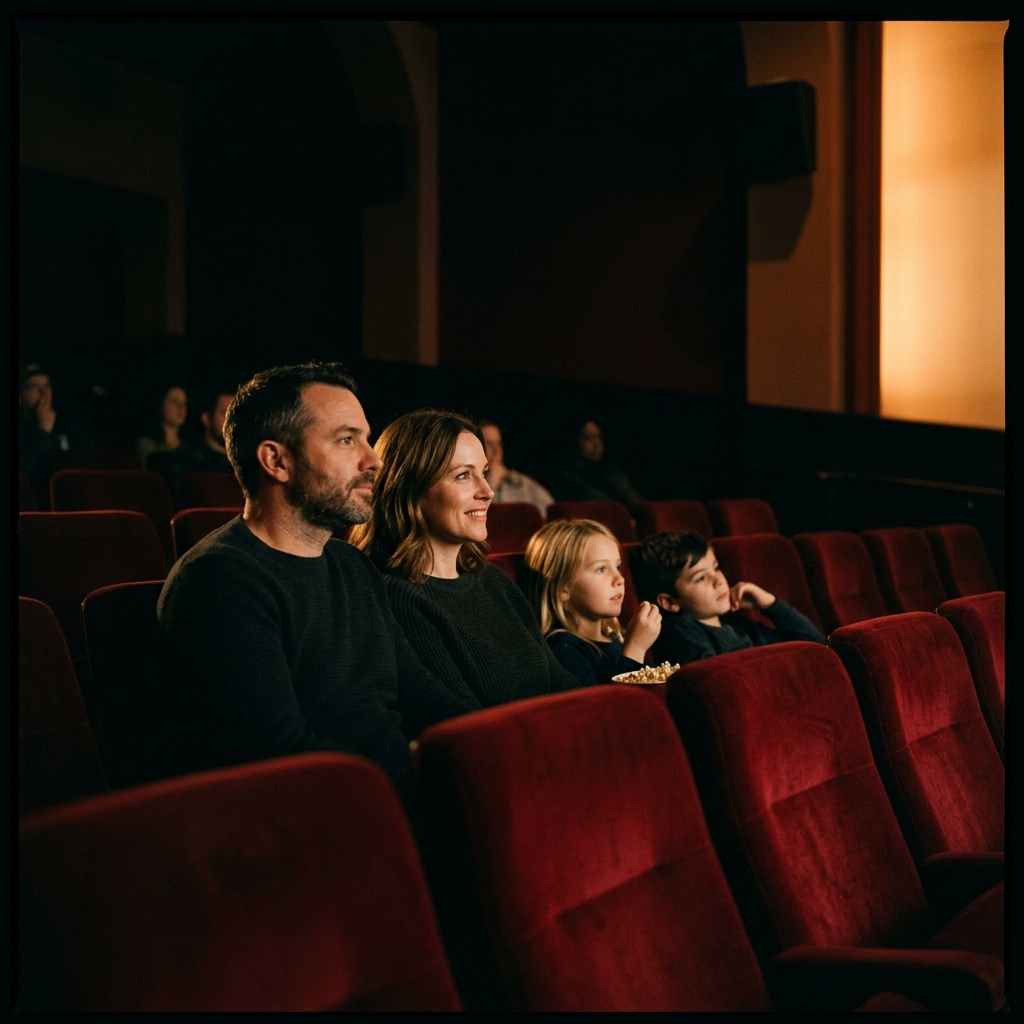
Taking the whole family to the movies should be magical, not stressful. Choosing the right seats can be the difference between a relaxed, joyful experience and a trip full of neck cramps, restless children, and awkward aisle shuffles. This guide covers everything you need to know about selecting the perfect cinema seats for every stage of childhood — from toddlers to teenagers.
The Golden Rules of Family Cinema Seating
Before diving into specifics by age group, here are the foundational principles for any family cinema visit:
- •Aisle seats for fastest exit when kids get restless
- •Back half of auditorium for comfortable viewing angles and softer audio
- •Near-centre seats for balanced stereo sound experience
- •Seats close to each other so children don't feel separated
- •Level rows (not steep rakes) for better sightlines for shorter kids
- •Front rows cause neck strain in under 30 minutes for young children
- •Central back rows offer less quick-exit flexibility
- •Balcony sections can feel vertiginous for children with height sensitivity
- •Seats directly under speaker arrays are significantly louder
Seating Guide by Age Group
Babies & Toddlers (Under 3)
For very young children, comfort and exit speed are your top priorities. Choose:
- Aisle seats in the back third of the auditorium
- Seats where both parents can sit together without a child seated alone in a flipping seat
- Quiet screenings or "baby-friendly" showings where available (many cinema chains hold these on weekday mornings)
At this age, avoid IMAX and PLF formats entirely. The audio levels exceed safe exposure limits for infants, and the visual scale can be genuinely frightening rather than exciting.
Children 3–7 Years
This is the core "animated movie" demographic, and most family cinema adventures happen here. The ideal seat position for this age group:
| Criterion | Recommendation | Why It Matters |
|---|---|---|
| Row depth | 60–70% from the screen | Comfortable viewing angle, auditorium audio peaks here |
| Column position | Centre or one column off-centre | Best stereo mix, image is most colour-accurate in the centre |
| Aisle access | One seat in from the aisle | Quick exit, but the outer aisle seat buffers against foot traffic |
| Screen height ratio | Below 30° upward gaze angle | Children's necks tire faster; more than 30° causes discomfort rapidly |
| Sound level | Avoid seats directly under speaker clusters | Speaker arrays in rows 3–5 can reach painful levels for sensitive children |
Tip: Bring foam earplugs rated at 25dB NRR for this age group. Most modern cinemas run their audio at 85–91dB SPL. For children, sustained exposure above 85dB is not recommended. Foam earplugs let children enjoy the film while protecting their developing hearing.
Children 8–12 Years
At this age, children can typically handle the full range of cinema formats, and many actively want the "biggest screen" experience. For older children:
- Standard cinemas: Centre seats, rows 55–65% back remain ideal
- IMAX: Middle third of the auditorium — rows from approximately 40% to 65% from the screen
- 4DX: Generally suitable; check your child's sensitivity to motion before booking the front section
This age group often cares intensely about having the "best seat" — involve them in the selection. Use a seat finder tool together before booking to make it part of the excitement.
Teenagers (13+)
Teenagers typically have similar preferences to adults. The main consideration is social dynamics: most teens prefer sitting with peers and may not want to be directly next to parents. Consider:
- Booking a row where teens sit together in the centre and parents bookend the group
- Choosing seats where the group has aisle access on at least one side
- For popular opening-night screenings, book early — good centre seats sell out fast
Seat Features to Look For
Recliner vs. Standard Seats
Recliners are excellent for families with older children and teenagers. The wide, padded surface and footrest provide genuine all-body comfort during long films. However, recliners have a downside for young children: the seat surface is wider than a small child, which means shorter kids slide into an uncomfortable semi-reclined position without control.
Standard tiered seats with a proper flip-down mechanism are often better for ages 3–8 because the seat depth is more proportionate to a child's frame.
Booster Cushions
Always ask the cinema for booster cushions before the film starts, especially in standard-seat cinemas where small children might not see over the head of the adult in the row ahead. Many major cinema chains (AMC, Cineworld, Odeon, PVR) keep booster cushions behind the counter — they're free, but you have to ask.
Cup Holders & Armrests
For family movie nights involving popcorn and drinks, shared armrests are a recipe for spilled drinks. Look for:
- Individual armrests between every seat (not shared) for age groups that tend to sprawl
- Deep cup holders — wider, shallower holders tip easily when small hands reach in
- Table trays in premium cinema formats, which are much more stable than cup holders alone
Special Considerations
Children with Sensory Sensitivities
For children with autism spectrum conditions (ASC), sensory processing differences, or anxiety around loud noises:
- Sensory-friendly screenings are offered at many major chains — these run at reduced audio levels (approximately 75dB vs. 85dB), with the house lights slightly raised, and often with more relaxed audience expectations
- If attending a regular screening, ear defenders (not just earplugs) provide better sound reduction for children with acute sound sensitivity
- Aisle seats remain important for sensory-sensitive children so they can exit calmly if they become overwhelmed
Wheelchair & Accessibility
Most modern cinemas reserve companion seating adjacent to wheelchair spaces. These positions vary by cinema, but are typically:
- Located at the back of the auditorium for level-floor access
- Or at the mid-level break in raked seating for front access
Always call ahead or use the cinema's accessibility booking line to confirm exact positioning and ensure adequate space.
Cinema-Specific Tips
AMC Theatres (USA)
AMC's Dine-In theatres with recliner seats work well for families with children 7+. The wider seats and folding tray tables make managing snacks much easier. AMC also offers Sensory Friendly Films screenings on the second and fourth Saturday of each month — check their website for schedules.
Cineworld / Regal (UK & USA)
Cineworld UK's Superscreen auditoriums have particularly steep raking, which means row 1 at the back is physically much higher than the screen level. For younger children, this creates a downward viewing angle that feels unstable. Stick to the middle section in Superscreen venues.
PVR / INOX / Cinépolis (India)
PVR's Gold and Luxe formats with sofa seating are superb for families, but be aware that the sofa seats encourage lounging — young children tend to slide into awkward positions. Bring a thin cushion for children under 8. PVR also operates a Kids Gallery format at select locations, designed entirely around younger audiences.
Vue Cinema (UK)
Vue's recliner rollout across their major venues has created some of the most comfortable family cinema seats in the UK. The powered recliners with a lock-position setting (not fully reclined) work well for all ages.
The Bottom Line: Your Family Seating Matrix
| Age Group | Best Row Zone | Format Recommendation | Key Priority |
|---|---|---|---|
| Babies (0–2) | Back third, aisle | Standard digital only | Quick exit access |
| Toddlers (3–5) | Back half, near-aisle | Standard digital only | Comfortable angle, exit speed |
| Young children (6–8) | 60–65% back, slight off-centre | Standard or PLF | Viewing angle & audio comfort |
| Older children (9–12) | 55–65% back, centre | Standard, IMAX, or PLF | Best immersion within comfort |
| Teenagers (13+) | Centre, 50–65% back | Any format | Social seating flexibility |
The most important thing is to match your seating choice to the specific needs of the youngest or most sensitive family member. A great seat for a 14-year-old might be genuinely uncomfortable for a 5-year-old. Plan around the youngest audience member first — you can always adjust upward from there.
Use our cinema seat finder before your next family film to get personalised row and seat recommendations for your specific cinema and format.
CinemaView Editor
Editor & Expert Reviewer
Cinema seat expert and audio-visual enthusiast at CinemaView, dedicated to helping moviegoers find the perfect viewing spot.
Related Guides & Articles
Best Cinema Date Night Seats: The Perfect Spots for Couples
A complete guide to finding the best cinema seats for a romantic date night — including the ideal rows for couples, which premium formats create the best shared experience, and which theaters offer love seats and VIP dining.
Best Seats for Neck Comfort: Say Goodbye to Cinema Neck Strain
A physical and geometrical breakdown of how seating distance and screen height affect neck tilt angles, and where to sit for a comfortable cinema experience.
Best Cinema Seat in the USA: IMAX vs Dolby vs Cinemark XD Compared
The definitive guide to finding the best cinema seat across America's top premium formats — IMAX, Dolby Cinema, Cinemark XD, and Regal RPX — with city-by-city recommendations and a seat selection matrix for every format.