
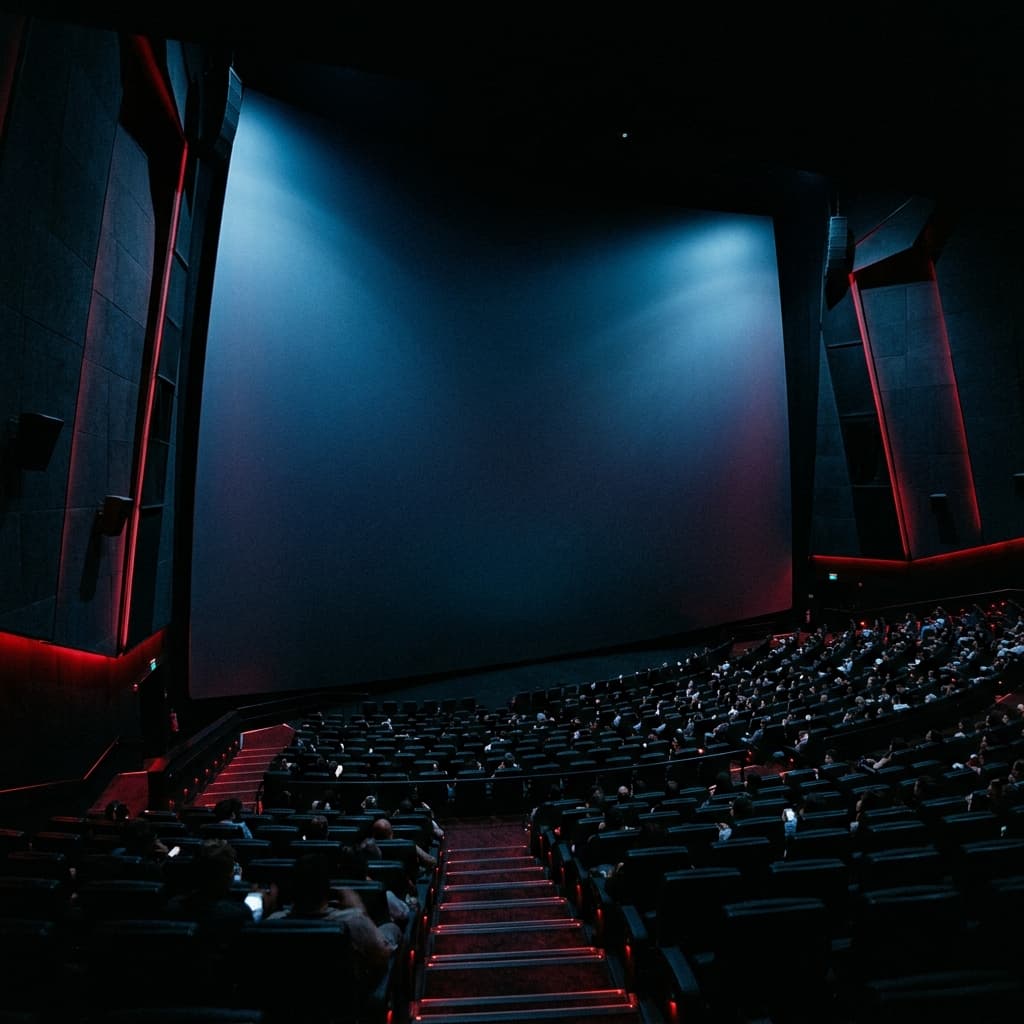
Not All IMAX Screens Are Created Equal
You have watched a movie in IMAX at two different theaters and one felt significantly bigger than the other, even though both were labelled "IMAX." You are not imagining it. The perceived size of an IMAX screen depends on far more than its listed dimensions.
Four factors determine how big an IMAX screen feels: screen height, aspect ratio, screen curvature, and auditorium depth. Understanding them helps you pick the right IMAX theater, and the right seat within it.
Screen Height Matters More Than Width
Human vision is wider than it is tall (roughly 200 degrees horizontal vs 130 degrees vertical). Width is easy to fill. Height is what creates the signature IMAX feeling of scale and awe.
A true IMAX GT screen at 1.43:1 aspect ratio can be 22 metres tall. A standard IMAX with Laser screen at 1.90:1 might be only 12 metres tall despite being a similar width. The taller screen fills your vertical peripheral vision, which triggers a stronger sense of immersion and physical presence. Read more about these ratios in our IMAX Aspect Ratios guide.
This is why a 1.43:1 IMAX film presentation feels dramatically bigger than a 1.90:1 presentation, even when the screen width is identical.
Aspect Ratio and the Expanding Frame
Films shot with IMAX cameras (like those by Christopher Nolan) switch between a standard widescreen ratio and the tall IMAX ratio during key sequences. This "expanding frame" effect, where the black bars disappear and the picture grows by up to 40%, creates a dramatic sense of scale that makes the screen feel even bigger than it physically is.
You only get the full expanding-frame effect on 1.43:1 screens. On 1.90:1 digital IMAX, the expansion is more modest. On a standard 2.39:1 screen, you get no expansion at all. This is one reason Nolan champions true IMAX.
Screen Curvature: The Wrap-Around Effect
IMAX screens are not flat. They curve gently toward the audience at the edges. This curvature serves two purposes:
- Uniform focus distance: A curved screen keeps every point approximately equidistant from the centre seats, maintaining consistent sharpness across the image.
- Peripheral wrapping: The curve extends the screen edges toward your peripheral vision, making the image feel like it surrounds you rather than sitting flat in front of you.
Different IMAX installations have different curvature radii. A deeply curved screen in a narrow auditorium feels more enveloping than a gently curved screen in a wide one, even if the physical dimensions are similar.
Auditorium Depth: Closer Is Bigger
A 20-metre-wide screen in a shallow auditorium where the back row is only 20 metres away will feel enormous. The same screen in a deep auditorium where the back row is 40 metres away will feel like a regular screen.
The metric that matters is viewing angle, the angular size of the screen from your seat. A larger viewing angle means the screen fills more of your vision. IMAX targets 60-70 degrees or more from the sweet spot, compared with 30-40 degrees in a standard theater. Our Viewing Angle Guide explains the geometry.
Some "IMAX" retrofits (sometimes called "LieMAX" by enthusiasts) put IMAX branding on a standard-sized screen in a standard-depth auditorium. The viewing angle barely exceeds a regular premium hall. See our IMAX 70mm vs Digital IMAX guide for the differences.
How to Find the Biggest-Feeling IMAX
When choosing an IMAX theater, look for these indicators:
- Look for "IMAX with Laser": Laser auditoriums are typically newer, larger, and use the 1.43:1 or full 1.90:1 ratio. Older xenon digital IMAX screens are often smaller retrofits.
- Check for 1.43:1 capability: Only a subset of IMAX theaters can project the full 1.43:1 frame. If yours can, it will feel significantly taller and bigger than a 1.90:1 location.
- Compare screen heights, not widths: Width is less perceptually important than height for the "wow" factor. A screen that is 18m wide and 14m tall will feel bigger than one that is 22m wide and 10m tall.
- Check the auditorium capacity: Fewer seats often means a shallower room and a higher viewing angle from every row. A 300-seat IMAX can feel bigger than a 500-seat one with the same screen.
In India, some of the biggest-feeling IMAX screens include Prasads IMAX in Hyderabad and select PVR IMAX with Laser locations.
Your Seat Amplifies (or Shrinks) the Effect
Even within the same IMAX theater, the perceived screen size varies dramatically by seat. The front-centre seats produce a viewing angle above 100 degrees (overwhelming). The back-side seats might drop below 40 degrees (underwhelming). The sweet spot, about two-thirds back and centred, gives you the 60-70 degree target that IMAX is designed for.
Use CinemaView to preview the screen view from any seat and find the position where the screen feels biggest without becoming uncomfortable. Try the seat picker now, it is free.