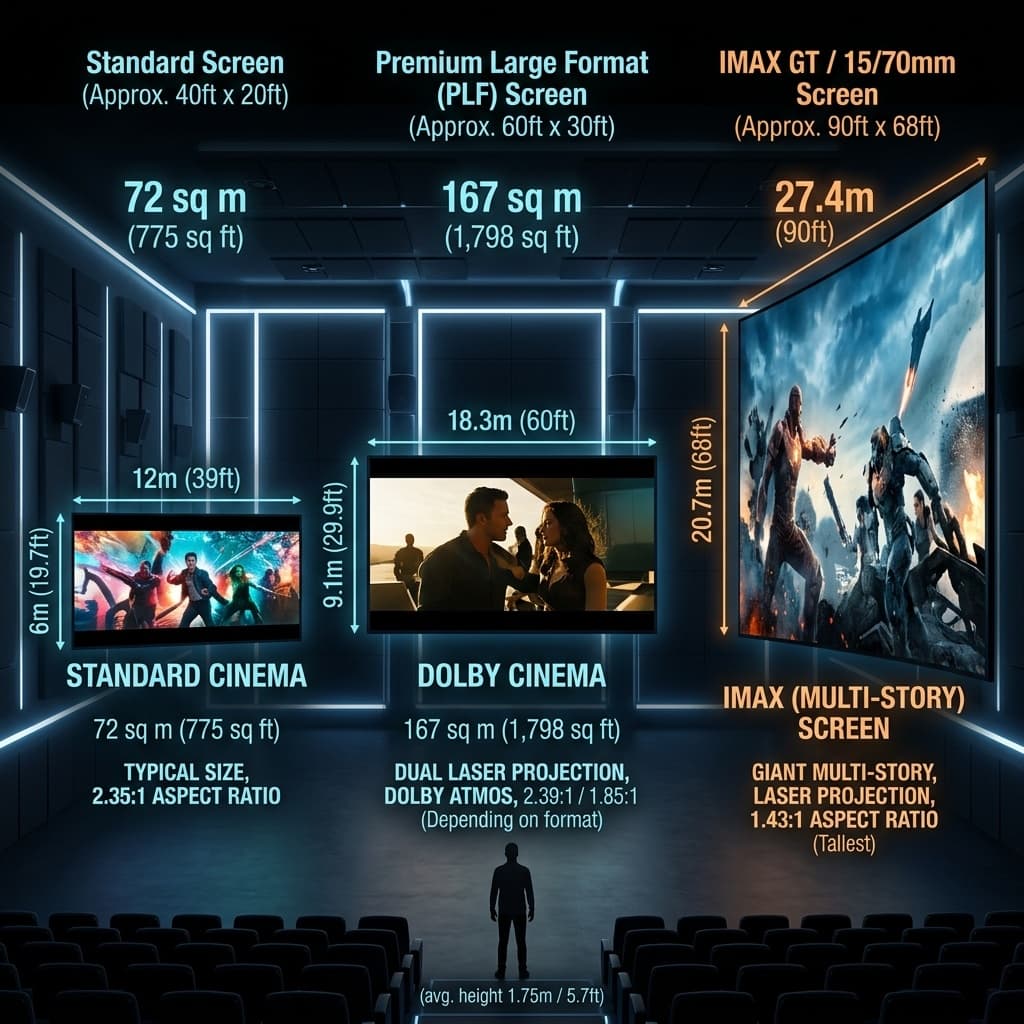
Why Screen Size Matters
The physical size of a cinema screen directly determines how immersive your experience is from any given seat. A larger screen fills more of your field of vision, making you feel like you are inside the movie. But the relationship between screen size, aspect ratio, and viewing distance is nuanced — a bigger screen is not always better if you are sitting in the wrong seat. Understand viewing angles in our Cinema Viewing Angle Guide.
Screen Sizes by Format
Standard Cinema
A typical standard cinema screen measures 10–15 metres wide and 4–6 metres tall, with a 2.39:1 widescreen aspect ratio. This is the baseline experience that most moviegoers are familiar with. Screen quality varies widely between multiplexes. Find standard seating tips in our Best Cinema Seat Guide.
IMAX
IMAX screens are the largest commercial cinema screens available. Sizes vary by installation type:
- IMAX GT Flagship: 26–29m wide × 18–20m tall (1.43:1 ratio). Read official details on the IMAX Website.
- IMAX Laser / GT: 22–26m wide × 12–16m tall
- IMAX Digital (Commercial): 15–18m wide × 8–10m tall (1.90:1 ratio)
The difference between a 15m commercial IMAX and a 29m GT Flagship is enormous. Our IMAX seating guide explains how to find the best seat for each variant. For a technical deep dive, visit our Ultimate IMAX Guide.
Dolby Cinema
Dolby Cinema screens typically measure 14–18 metres wide at a 2.39:1 ratio. While smaller than IMAX, Dolby compensates with superior contrast (1,000,000:1), peak brightness, and Dolby Atmos sound. The screen is flat, not curved. Dolby Cinema seating guide →
ScreenX
ScreenX uses a standard-width main screen (12–16m) but adds side-wall projections that extend the picture 270 degrees around the auditorium. The effective “screen” area is dramatically larger, though the side panels are lower resolution. ScreenX seating guide →
4DX
4DX auditoriums use standard-sized screens (10–14m). The focus is on physical and environmental effects rather than screen size. The motion seats, wind, and water effects differentiate 4DX, not the picture. 4DX seating guide →
Aspect Ratios Explained
- 1.43:1 (True IMAX): The tallest cinema format. The screen is almost square. Up to 40% more image area than widescreen. Compare formats directly in our IMAX vs Dolby Cinema Guide.
- 1.90:1 (IMAX Digital): Wider than 1.43:1 but still taller than standard widescreen. The most common IMAX ratio.
- 2.39:1 (Scope / Widescreen): The standard for most theatrical releases. Very wide, cinematic look.
- 1.85:1 (Flat): Slightly taller than scope. Used for dramas and comedies.
Compare Screen Sizes in CinemaView
CinemaView generates each auditorium to real-world screen dimensions. Switch between Standard, IMAX (with multiple size variants), Dolby Cinema, ScreenX, and 4DX from the same seat to see how screen size directly affects your viewing experience.