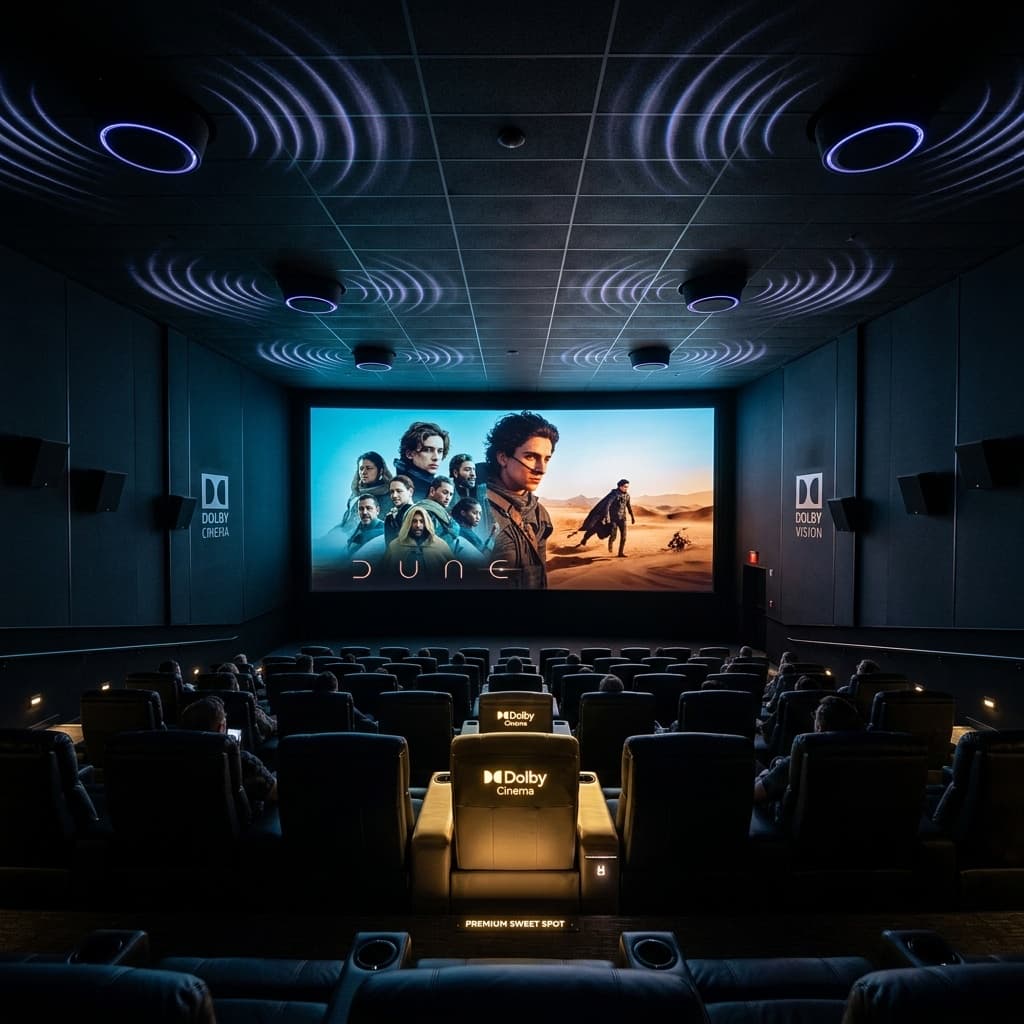
What Makes Dolby Cinema Different
Dolby Cinema combines two proprietary technologies: Dolby Vision HDR for picture quality and Dolby Atmos for immersive surround sound. The result is the highest contrast ratio, the deepest blacks, and the most precise audio placement of any standard cinema format. Read more about Dolby audio standards on the official Dolby Website.
Dolby Cinema halls are purpose-built and typically smaller and more intimate than IMAX. Every seat is engineered to be “good,” but the difference between a good seat and the best seat is significant — especially for Atmos spatial audio.
The Best Dolby Cinema Seat Position
The ideal Dolby Cinema seat is in the dead centre of the middle third of the auditorium. In a typical 10-row Dolby Cinema, this means rows E through G, centred on the middle column.
Why centre matters more in Dolby Cinema than other formats:
- Dolby Atmos precision: Atmos uses object-based audio with speakers on the ceiling, walls, and behind the screen. The sweet spot — where all audio objects are perceived at their intended positions — is a small zone in the centre. Off-centre seats hear lateral sounds at skewed angles.
- Dolby Vision contrast: The dual-laser projector delivers perfect blacks. Sitting centre ensures equal light distribution across the screen with no hot-spots or dimming at the edges.
- Screen geometry: Dolby Cinema screens are flat (not curved like IMAX), so off-axis viewing causes more noticeable keystoning and colour shift. Learn about standard screen dimensions in our Movie Screen Size Guide.
Dolby Cinema vs Standard Seating
In a standard cinema, the “best seat” window is wider because the surround sound system is simpler (5.1 or 7.1 channels) and the projection is less directional. In Dolby Cinema, the engineering precision means the quality difference between centre and edge seats is more pronounced. Plan your seat choice carefully. See how to spot the sweet spot in a standard cinema in our Best Cinema Seat Guide.
Seats to Avoid in Dolby Cinema
- Front 2 rows: Too close for the HDR picture — the brightness can be uncomfortable and neck strain is significant.
- Far side seats:Atmos audio objects shift noticeably. The overhead effects lose their “above” quality and start sounding like they come from the side.
- Last row: Often against the back wall, creating bass buildup and acoustic reflections that muddy the Atmos mix.
Preview Your Dolby Cinema Seat
Use CinemaView to preview the screen from any seat in a Dolby Cinema auditorium. Compare viewing angles with IMAX or read our IMAX vs Dolby Cinema comparison to decide which premium format is worth your money.