
The Question Every Moviegoer Avoids
You have been looking forward to a film for months. You buy your ticket, grab popcorn, settle in, and then spend two hours with a stiff neck, one ear blasted by a surround speaker, and the screen looking oddly trapezoidal. Was the movie bad, or was the seat?
The honest answer: a bad seat cannot ruin a genuinely great film, but it can significantly diminish the experience. And for a middling film, a bad seat can tip the scales from "enjoyable enough" to "I wish I had stayed home."
What a Bad Seat Actually Costs You
A poorly chosen seat introduces three types of degradation:
- Physical discomfort: Front-row seats in a large auditorium force your neck into a constant upward tilt. Within 20 minutes, neck muscles fatigue. By the end of a two-hour film, you leave with a headache and stiffness that colours your memory of the entire experience. See our full breakdown of seats to avoid.
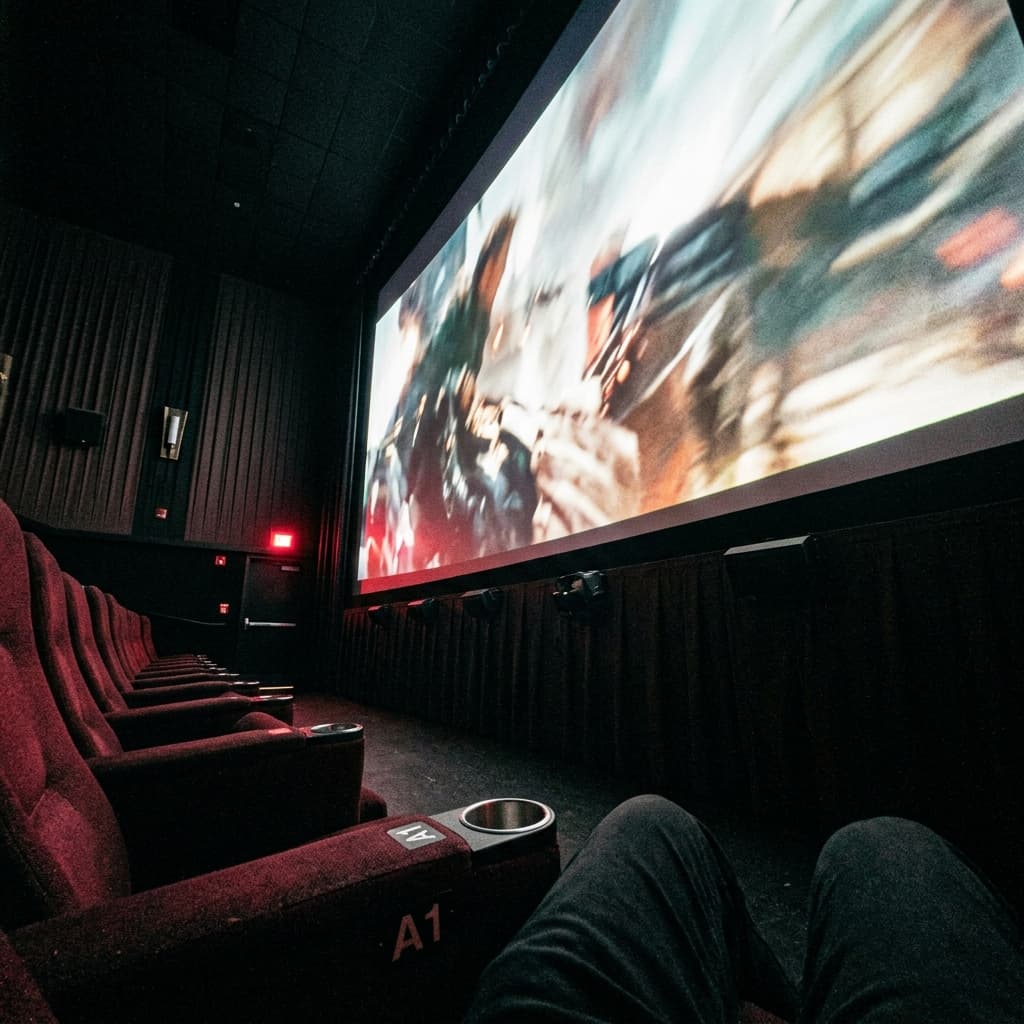
- Visual distortion: Sitting off-axis (far left or right) introduces keystone distortion, the image appears wider on the near side and narrower on the far side. Faces look subtly wrong. Landscapes lose their intended composition. Read about why the centre seat preserves geometry.
- Sound imbalance: Cinema audio is mixed for the centre of the auditorium. From a far side seat, the near speaker array dominates, making the soundfield lopsided. Dialogue pans oddly. Surround effects meant to come from behind instead seem to come from one side. The carefully crafted spatial audio becomes flat and disorienting.
The Compounding Effect
These degradations do not exist in isolation. They compound:
When you are physically uncomfortable, you shift in your seat. Shifting breaks focus. Broken focus means you miss story beats. Missing story beats makes the plot feel disjointed. A disjointed plot makes you check the time. Checking the time means you are no longer immersed. And without immersion, the movie feels longer, duller, and less satisfying.
A good seat eliminates all of this friction. The movie flows, your body is relaxed, and you forget you are in a room with 200 strangers.
Real-World Examples
- IMAX front row: A 22-metre-wide IMAX screen from the front row gives you a viewing angle of over 120 degrees. Your peripheral vision is completely overwhelmed. You physically cannot see the whole screen without turning your head side to side. See How Close Is Too Close in IMAX.
- Far-side Dolby Cinema: Dolby Cinema uses Dolby Atmos object-based audio with overhead speakers. From a far side seat, the overhead panning effects collapse into the near wall, losing the signature "sound from above" experience. The Dolby sweet spot is narrow and centred.
- Back-row in a large hall: In a 400-seat auditorium, the back row puts you 30+ metres from a standard screen. The image shrinks to roughly 15 degrees of your field of view, less than a large TV at home. You have paid a cinema ticket price for a worse-than-home viewing experience.
When Seat Choice Matters Most
Not every screening demands a perfect seat. But some situations are more sensitive:
- Visually immersive films: Movies shot for IMAX (Nolan, Villeneuve, Cameron) are composed for the centre-sweet-spot viewing angle. A side seat literally shows you the wrong composition.
- Spatial-audio-heavy films: Films mixed in Dolby Atmos with aggressive overhead and surround panning (horror, sci-fi) lose their spatial magic from off-centre seats.
- Long runtimes: A 3-hour epic from an uncomfortable seat is an endurance test. The same 3 hours from a well-positioned recliner is effortless.
- 3D screenings: 3D relies on precise stereo alignment that only works correctly from the centre. Off-axis 3D produces ghosting and eye strain. Check our guide for glasses wearers.
How to Never Get a Bad Seat Again
The fix is simple:
- Default rule: Centre column, two-thirds back. This works in every format, every auditorium, every time.
- Preview before you book: CinemaView lets you see the screen from any seat in a 3D simulation before you commit. No more guessing.
- Book early: The best seats sell first. Booking on day one gives you the pick of the auditorium.
Try the seat picker now. It is free, instant, and it might save your next movie.