
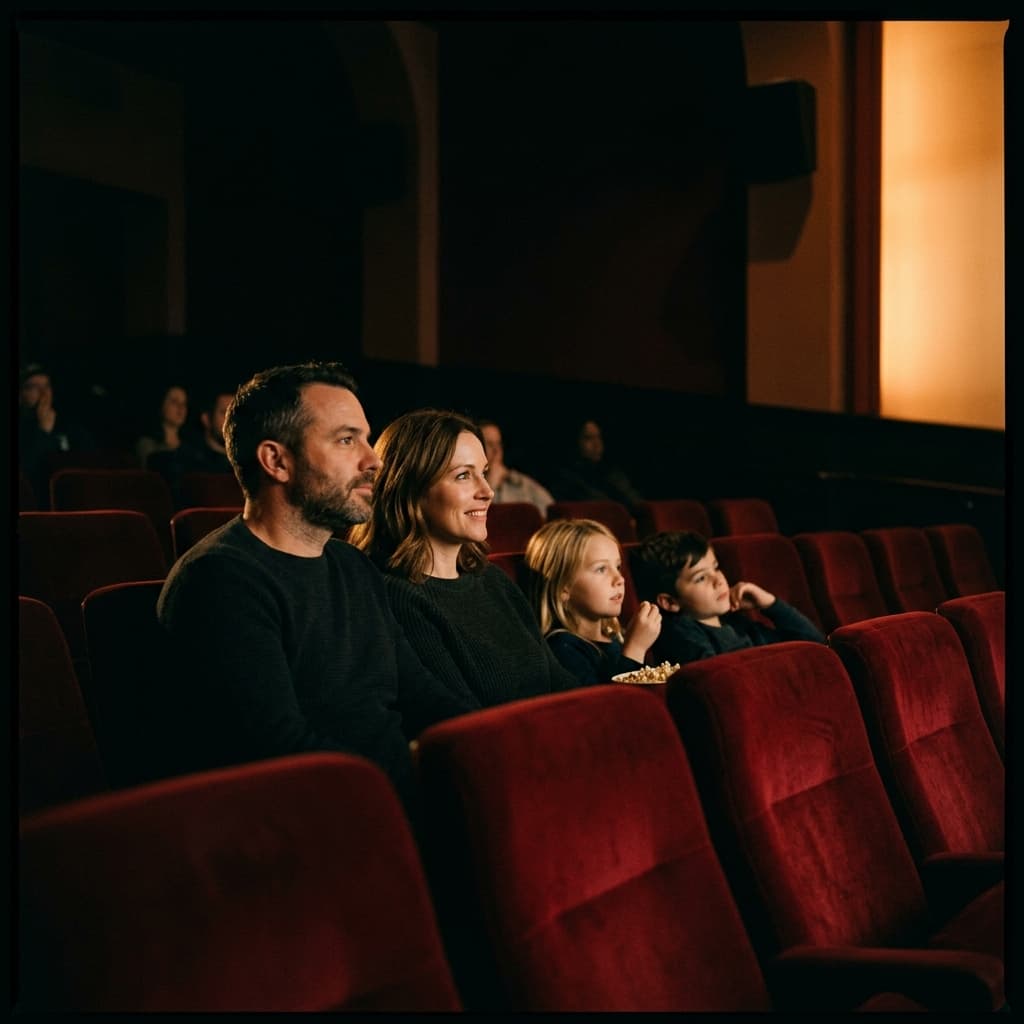
Why Seat Choice Matters for Families
Taking the whole family to the cinema turns seat selection into a group optimisation problem. You need clear sightlines for shorter viewers, balanced sound that is not overwhelming for young ears, easy aisle access for bathroom breaks, and enough elbow room for everyone to be comfortable. Get the seat wrong and you spend two hours managing discomfort instead of enjoying the film.
The good news: there is a reliable formula. It works across standard halls, IMAX, and premium formats, and it only takes about 30 seconds to apply when booking.
The Family Sweet Spot
The ideal family seats are in the centre of the upper-middle rows, on the aisle side. In a typical 15-row auditorium, that means rows 8 through 11, one or two seats in from an aisle.
Here is why this zone works:
- Clear sightlines: Upper-middle rows give shorter family members (children, seated partners) an unobstructed view over the heads in front. The stadium rake at this height is steep enough that even a tall viewer in the next row does not block the screen.
- Comfortable viewing angle: You are far enough back that the screen sits comfortably within everyone's natural field of vision, no neck craning. See our Cinema Viewing Angle Guide for the geometry.
- Balanced sound: The audio mix point is typically two-thirds of the way back and centred. Sitting near this zone means dialogue is crisp and bass is present but not chest-thumping, ideal for younger viewers who may be sensitive to very loud low-frequency effects.
- Easy exit: Picking seats one or two in from the aisle gives you a quick escape route for bathroom runs, snack refills, or if a child gets overwhelmed, without disrupting the rest of the row.
Seats Families Should Avoid
Some seats that work fine for solo adults become problematic with a family:
- Front three rows: The screen overruns peripheral vision, especially for smaller viewers. Children may find the visual overload uncomfortable or even nauseating in 3D. Neck strain sets in fast. Read why in our Worst Seats guide.
- Dead-centre of a long row: Great acoustics but terrible for exits. If a young child needs the bathroom, you will be shuffling past 8 sets of knees in the dark.
- Very back row: In large auditoriums the screen shrinks to a distant rectangle. Children lose engagement because the image is not immersive enough. The back row is also where couples and teenagers tend to congregate, which may not suit a family outing.
- Directly under a surround speaker: Side and rear speakers can be startlingly loud in action sequences. Young children are more sensitive to sudden volume spikes.
Best Family Seats by Format
The sweet-spot formula adapts slightly depending on the cinema format:
- Standard Cinema: Rows 8-11 (of 15), aisle-adjacent centre. The classic formula.
- IMAX: Push further back, rows 9-12, to compensate for the massive screen. The tall 1.43:1 or 1.90:1 frame needs extra distance for children to take in without turning their heads. See our IMAX Seating Guide.
- Dolby Cinema: Rows E-G (of 10) are the Dolby Atmos sweet spot. Dolby Cinema recliners are wider and more comfortable, which helps families spread out.
- 4DX: Consider whether 4DX is appropriate for the age group first. Motion and water effects can startle young children. If you go, sit in the back rows (9+) for milder effects. See our 4DX guide.
Practical Tips for Family Cinema Trips
- Book early: Aisle-adjacent centre seats sell out fast. Book as soon as tickets open to secure the family sweet spot.
- Use booster seats: Most multiplexes offer free booster cushions at the entrance. Ask before you sit down, they make a significant difference for children under 8.
- Arrive early: Give children time to settle in, visit the bathroom, and adjust to the dark before the trailers start.
- Check the runtime: Films over 2.5 hours are challenging for young children regardless of seat position. Plan a bathroom break at the midpoint.
- Bring ear protection: For children under 5, cinema volume can be uncomfortable. A pair of children's ear defenders lets them enjoy the movie at a comfortable level.
Preview Before You Book
Use CinemaView's simulator to check the screen view from any seat before you commit. Switch between formats, click on a seat, and see exactly what your family will see. It is free and runs in your browser, try it now with the seat picker.