
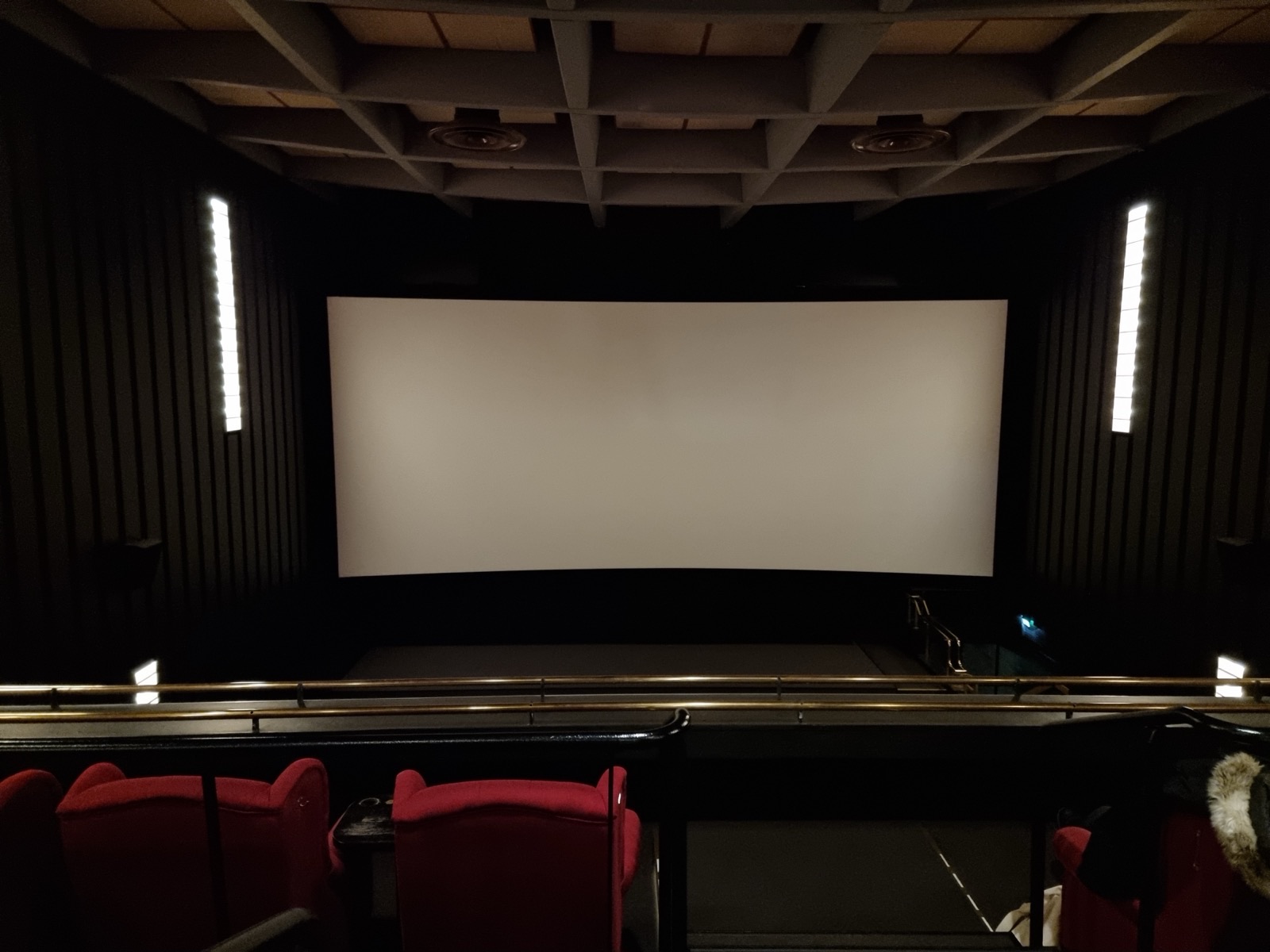
Understanding Viewing Angles
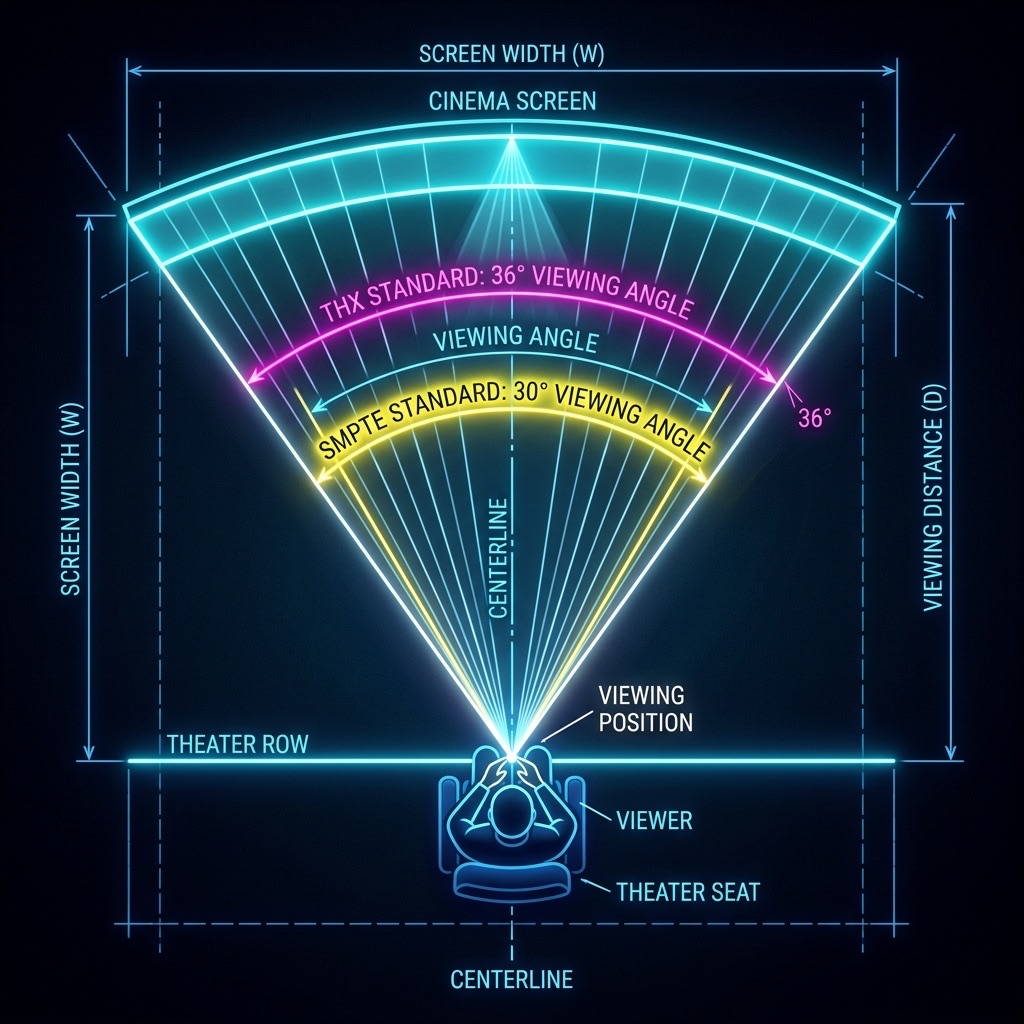
When you sit in a movie theater, the angle from your eyes to the outer edges of the screen is the horizontal viewing angle. Industry leaders like THX recommend a minimum viewing angle of 36 degrees for normal seating, while premium immersive spaces target 50 to 70 degrees.
If the angle is too wide (closer seats), your eyes have to scan back and forth, which causes fatigue.
Acoustic Optimization
Most audio calibration occurs exactly at the two-thirds distance mark in the center seat. Sitting here guarantees that you hear sound exactly as the director intended.
Seating Rake and Sightlines
The slope of the theater floor, or the seating rake, is engineered to prevent the heads of people in front of you from blocking your sightlines. In older, flatter theaters, the rake is minimal, making seat selection highly sensitive. Modern stadium-style theaters have steep rakes, meaning almost every seat has a clear line of sight.
| Format | Optimal Rake | Immersion Index |
|---|---|---|
| Legacy Flat | 5-8° | Low |
| Stadium Seats | 15-20° | Medium |
| IMAX GT Screen | 25-30°+ | Very High |
Conclusion
By understanding how seating rake, acoustics, and viewing angles interact, you can make smarter decisions every time you book a ticket. Ready to check your seat? Try the seat picker tool!
CinemaView Editor
Editor & Expert Reviewer
Cinema seat expert and audio-visual enthusiast at CinemaView, dedicated to helping moviegoers find the perfect viewing spot.
Related Guides & Articles
Cinema Viewing Angle Guide: Optimal Distances and Angles
Understand how cinema viewing angles affect immersion. Learn the optimal distance from the screen, THX recommended angles, and how to use viewing angle to pick the best seat.

Why the Center Seat Gives the Best Movie Experience
The centre seat keeps the image geometry correct, sits in the audio sweet spot, and is essential for clean 3D. Here's the science behind the 'director's seat'.