
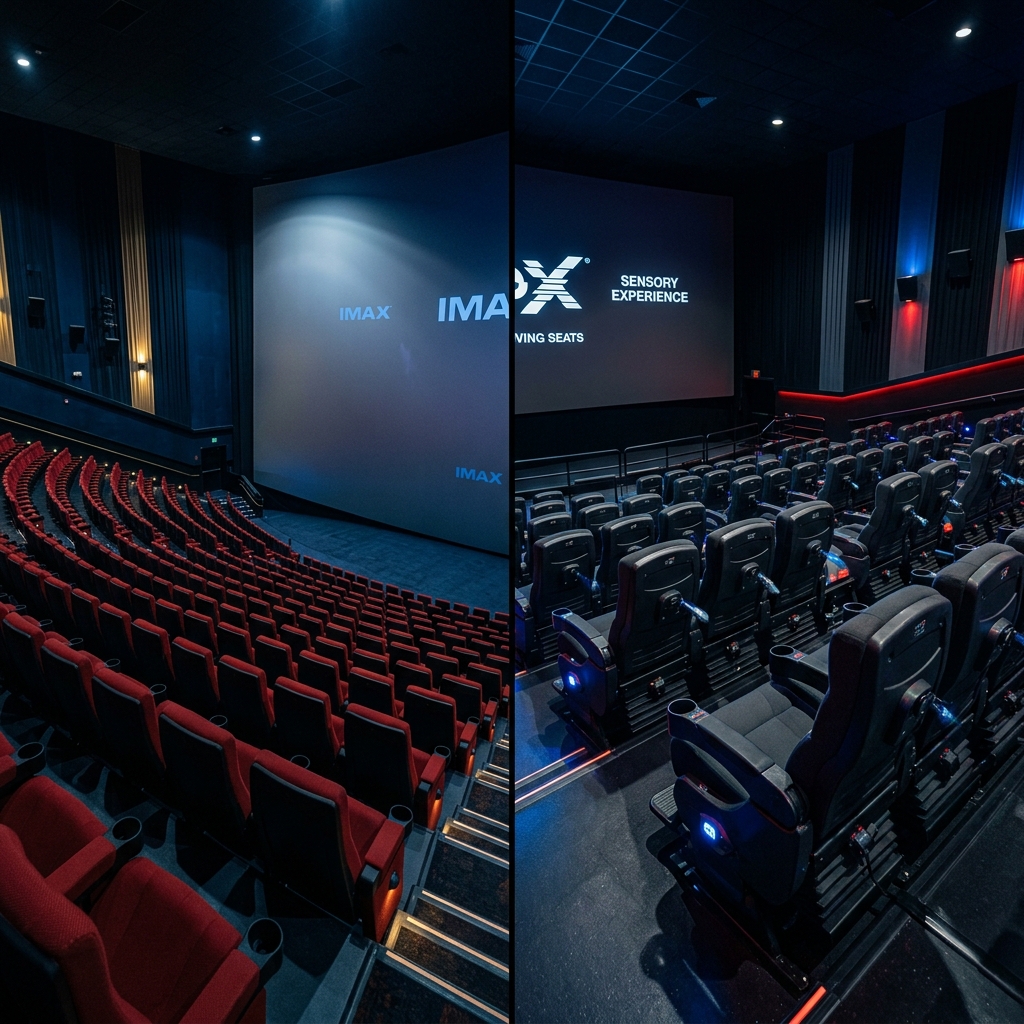
In the premium cinema format wars, two formats generate the most debate: IMAX and 4DX. They represent completely opposite philosophies of what makes cinema special. IMAX argues that a gigantic, room-filling screen with precision audio is the ultimate cinematic experience. 4DX argues that what truly immerses you is physical sensation — seats that move, wind that blows, and water that sprays in sync with the on-screen action.
Which format is actually worth your money? This comprehensive comparison breaks down every dimension to help you decide.
IMAX vs. 4DX: The Core Comparison
Let's start with the fundamental technical differences between the two formats:
| Feature | IMAX (Laser GT) | 4DX |
|---|---|---|
| Screen Size | Massive (up to 26m wide) | Standard multiplex size |
| Aspect Ratio | 1.43:1 (fills full screen height) | 1.85:1 or 2.39:1 standard |
| Audio System | 12-channel IMAX Sound | Dolby Surround (standard) |
| Seat Type | Standard or premium recliner | Motion-enabled with effects |
| Physical Effects | None (visual/audio only) | Motion, wind, water, scent, fog |
| Best For | Epic visual films, Nolan films | Action, horror, adventure |
| Ticket Price (US) | $22–$32 | $20–$27 |
| Motion Sickness Risk | Low | High for sensitive viewers |
For a similar comparison between IMAX and Dolby Cinema, read our IMAX vs. Dolby Cinema guide.
The IMAX Case: Why Scale Wins
IMAX's core argument is that filling your entire field of vision with a high-resolution image creates the most psychologically immersive experience possible. When a film was shot with genuine IMAX cameras — like Christopher Nolan's work, or The Odyssey — the 1.43:1 aspect ratio reveals significant additional footage above and below the standard 2.39:1 frame.
The effect is extraordinary: the screen becomes a window, not a TV. You don't watch the film — you feel like you're inside it.
- •Unmatched visual scale — the largest commercially available cinema screen format
- •Films specifically shot for IMAX reveal unique footage invisible in standard formats
- •12-channel IMAX sound system delivers precise, calibrated audio
- •Comfortable for all viewers — no motion sickness risk, no physical effects
- •No physical sensation elements — purely visual and audio immersion
- •Not all IMAX screens are created equal — Liemax retrofits are significantly inferior
- •Premium IMAX seats can sell out weeks in advance for major releases
The 4DX Case: When Cinema Becomes an Attraction
4DX, developed by South Korean company CJ 4DPLEX, transforms the cinema seat into a full-body experience. The technology uses:
- Motion seats: Pitch, roll, heave, yaw, surge movements synchronized to on-screen action
- Wind effects: Air blasted from seat sides during explosions, falls, or flight scenes
- Water effects: Fine mist sprayed from in front during rain, ocean, or water scenes
- Environmental effects: Strobe lighting, fog, scent, snow/bubbles for key scenes
- Haptic feedback: Vibration and back/leg ticklers for precise effect moments
This makes 4DX ideal for certain genres — particularly action blockbusters, horror films, and animated adventures.
- •Completely unique physical experience unavailable in any other cinema format
- •Makes action sequences genuinely thrilling — especially car chases, dogfights, battles
- •Great for children's films — animated features in 4DX are enormously popular with families
- •Standard screen size and image quality — no visual advantage over a standard multiplex
- •Physical effects can be distracting or uncomfortable during dialogue-heavy scenes
- •High motion sickness risk for sensitive viewers
- •Water effects are divisive — some viewers hate getting wet
Is 4DX Worth It?
4DX adds genuine value for high-octane action films (Mission Impossible, Fast & Furious, superhero blockbusters). It adds very little value for drama, slow-burn thrillers, or character-heavy films where the physical effects become intrusive distractions. The format is best experienced at least once for curiosity's sake.
Which Films Suit Which Format?
The right format choice changes dramatically by genre:
| Genre | Best Format | Why |
|---|---|---|
| IMAX-shot films (Nolan, etc.) | IMAX | Extra footage in 1.43:1 ratio |
| Nature documentaries | IMAX | Scale and detail are transformative |
| Action blockbusters | 4DX | Motion effects enhance adrenaline |
| Horror films | 4DX | Physical effects amplify tension and scares |
| Drama / character films | Standard or Dolby | Effects distract; audio quality adds value |
| Animated family films | 4DX or IMAX | Both enhance the experience for children |
Where to Sit in 4DX
4DX seating is unique because seat position affects which effects you receive most strongly. Unlike IMAX where middle seats are universally preferred, 4DX has its own quirks:
- Middle rows (D–H): The best balance of screen size and effect calibration
- Back rows: Effects feel slightly more intense — more seat movement range
- Front rows: Closest to the water and wind nozzles — most effect immersion
- Avoid aisle seats: The side air effects work best from center seats
For regular IMAX seating strategy, see our Best Seat in IMAX guide. Use CinemaView to simulate the visual sightlines before choosing between formats.
IMAX vs. 4DX: The Final Verdict
Choose IMAX if: You prioritize visual scale, the film was shot in IMAX, you're seeing a Christopher Nolan or nature documentary film, or you're sensitive to motion sickness.
Choose 4DX if: You're watching an action blockbuster, you want a theme-park-style experience, you have children who'll love the physical effects, or you've already seen the film in a standard format and want a completely different experience.
Whichever format you choose, always verify the format and screen type before booking at IMAX.com or your local cinema chain's website. For seating advice tailored to every format, CinemaView lets you preview your seat's view before committing.
CinemaView Editor
Editor & Expert Reviewer
Cinema seat expert and audio-visual enthusiast at CinemaView, dedicated to helping moviegoers find the perfect viewing spot.
Related Guides & Articles
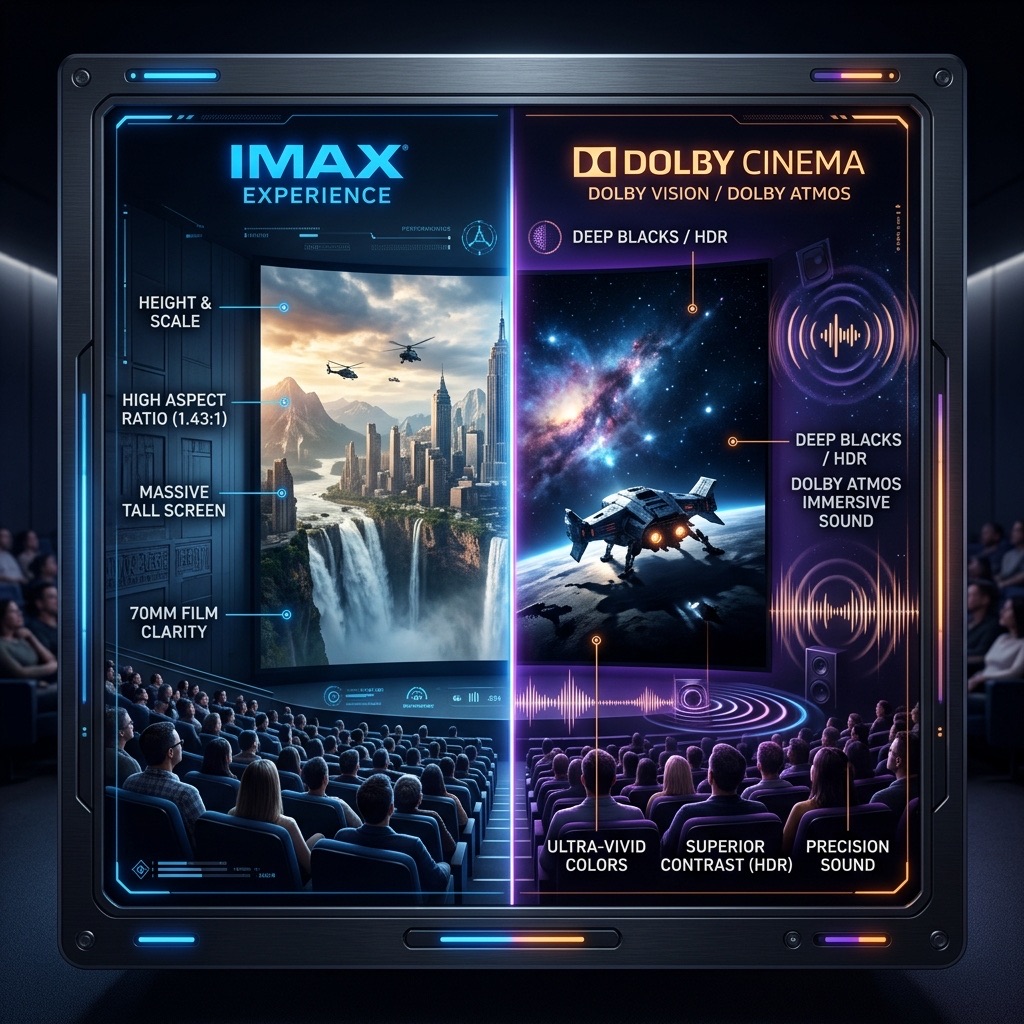
IMAX vs Dolby Cinema: Which Is Better?
A detailed comparison of IMAX and Dolby Cinema. Screen size, resolution, sound systems, HDR, seating, and which format is worth your money for different types of movies.
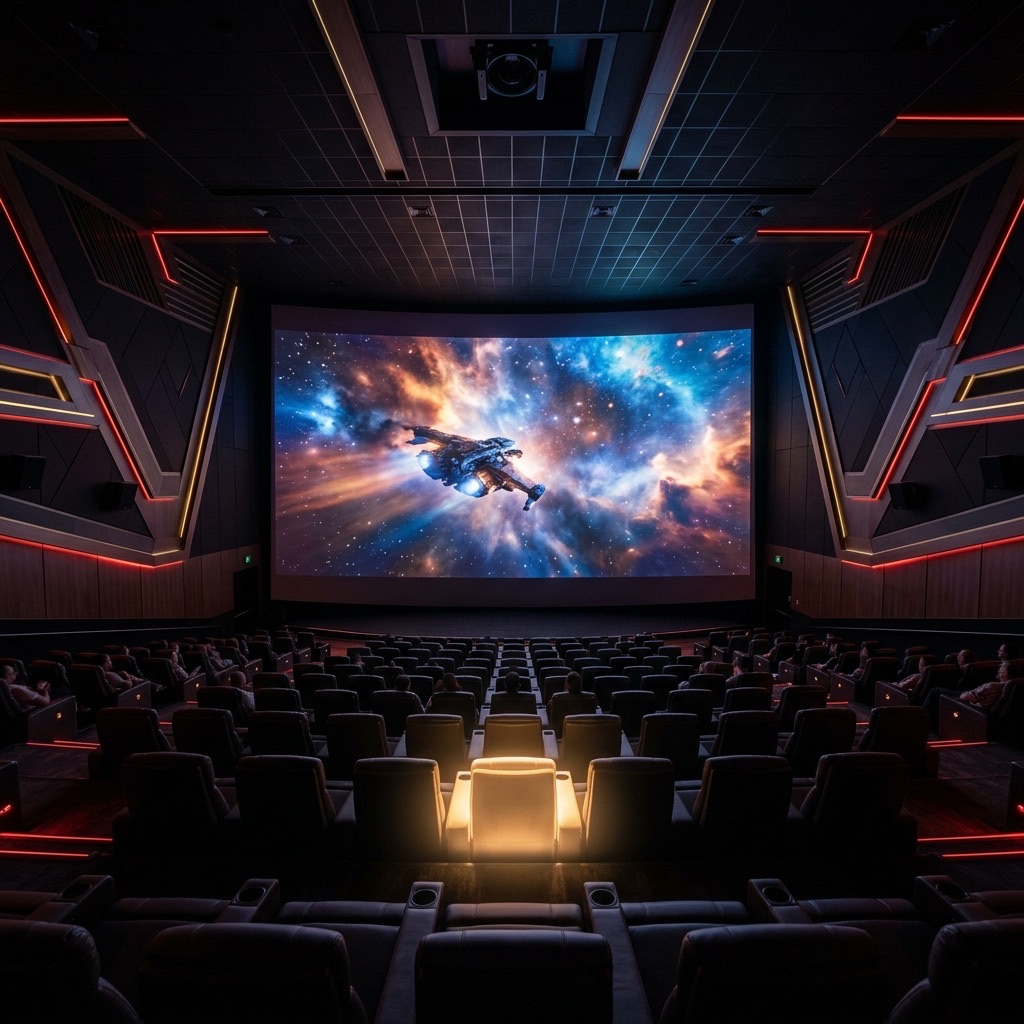
Best Seat in IMAX: Complete Seating Guide
Find the best seat in an IMAX theater. Learn where to sit for optimal viewing angles, audio coverage, and immersion across IMAX Laser, GT, and Digital formats.
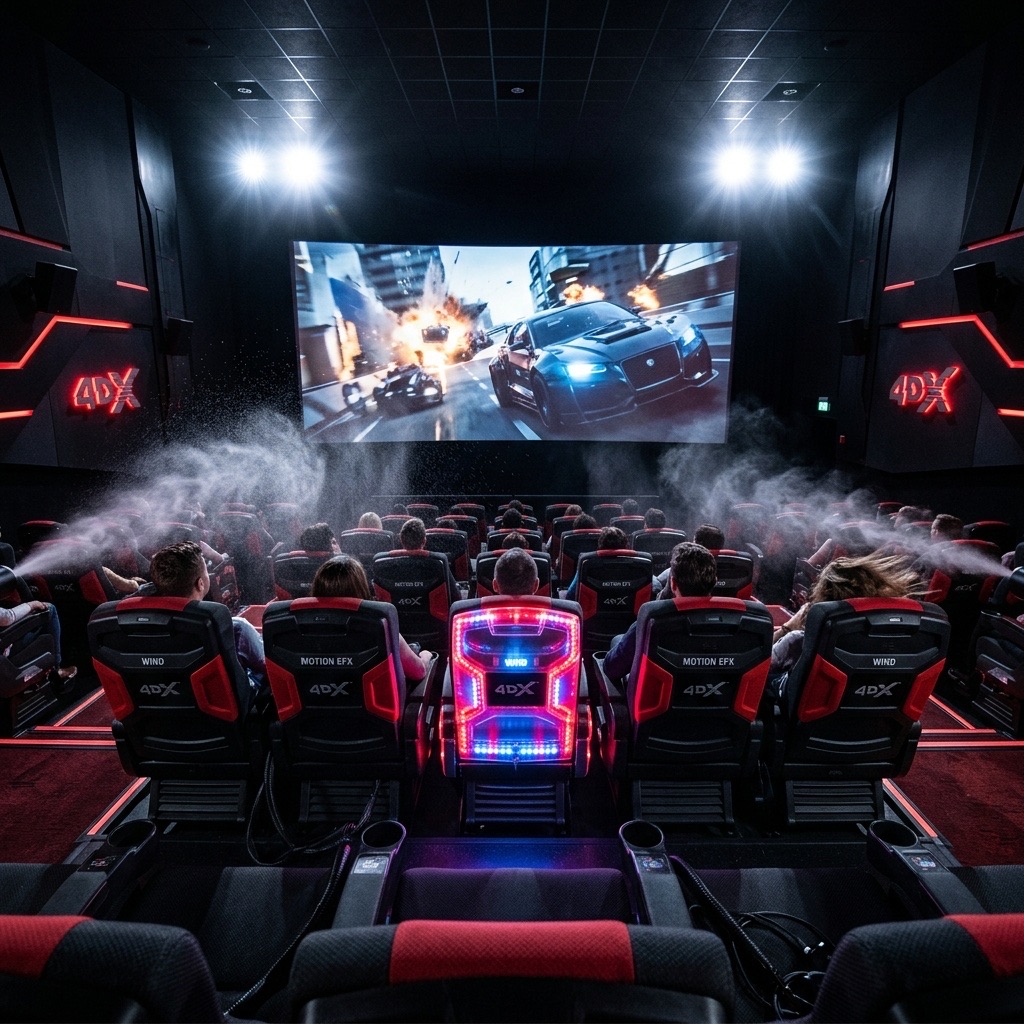
Best Seat in 4DX: Complete Seating Guide
Find the best seat in a 4DX theater. Learn where to sit for the strongest motion effects, optimal screen coverage, and the most immersive 4DX experience.